Can a paralyzed person learn to walk again?
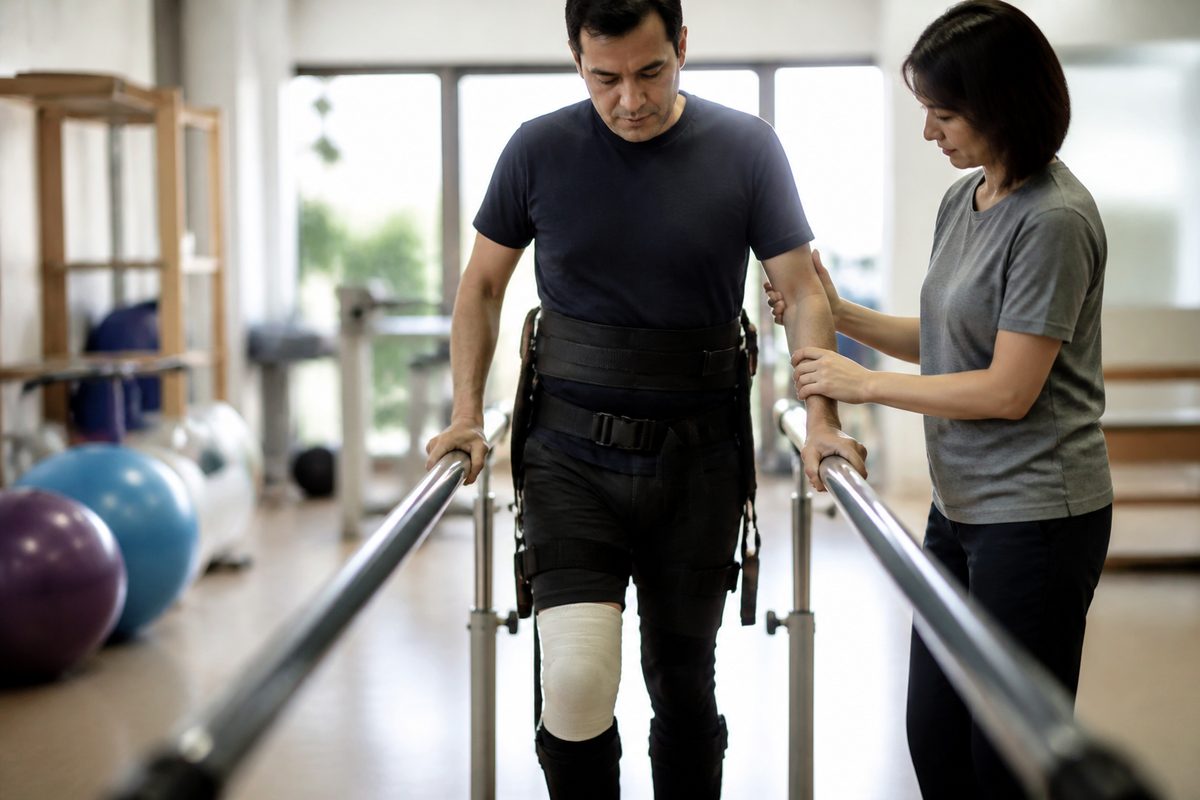
Yes, some paralyzed people can learn to walk again, but the outcome depends on how much movement and feeling remain after the injury. Recovery can mean walking alone, using braces or a frame, taking steps during Therapy, or standing safely for short periods. A person with complete Paralysis has a different outlook from someone whose nerve pathways still send signals past the damaged area.
The key point is simple: the word paralyzed doesn’t tell you enough. The level and type of damage matter more. A careful medical and movement check can show which goals make sense and what kind of training may help.
What does learning to walk mean after paralysis?
Learning to walk can mean several things. One person may walk around the home with a frame. Another may take assisted steps in a clinic but still use a wheelchair each day.
Someone else may regain enough control to walk without equipment.
Each outcome calls for a different mix of strength, feeling, balance and stamina. Walking in a supported session isn’t the same as crossing a wet car park, rising from a low chair or moving through a packed shop. Useful recovery has to work where the person lives.
This difference is easy to miss. A video of someone taking several steps may show real progress, but it may not show how much support they used or how tired they became. Functional Walking means moving with enough safety, speed and control to finish a useful task.
In my experience, people often feel less lost when the goal gets specific. Instead of saying they want to walk again, they might aim to stand from bed, walk ten metres with a frame or reach the bathroom safely. A clear task makes progress easier to track.
Why does the type of nerve damage change the answer?
The brain sends movement signals through the Spinal cord and into the nerves that control muscles. Signals for touch and feeling travel back toward the brain. Damage can block some or all of this traffic.
A complete Spinal cord injury means doctors can’t find sensory or motor function in the lowest sacral segments during a formal exam. An incomplete Injury leaves some function below the damaged level. That remaining function may give the rehabilitation team more nerve pathways to train.
Complete doesn’t mean every nerve cell was cut in half. It’s a medical classification based on the exam. Incomplete also covers a wide range.
One person may feel touch but have little useful movement. Another may move several muscles against gravity.
The American Spinal Injury Association Impairment Scale helps clinicians describe these differences. It grades spinal cord injury from AIS A to AIS E. AIS A describes a complete injury on the exam, while later grades describe different amounts of remaining sensation and movement.
AIS E means the tested function has returned to normal, though other symptoms can remain.
This grade helps guide the discussion, but it isn’t a personal deadline or promise. Doctors also look at the level of damage, early changes, pain, muscle tone and other health issues.
How can the nervous system relearn movement?
The nervous system can change how it uses pathways that still work. This ability is called neuroplasticity. Repeated, meaningful movement gives the brain and spinal networks practice at doing a task.
Practice needs to be more than moving the legs back and forth. Walking means shifting weight, controlling the trunk, clearing each foot and reacting when balance changes. The nervous system learns the whole pattern through repeated tries and useful feedback.
Physical therapy may include task-based walking, standing work, strength exercises and electrical stimulation. A therapist may support part of the person’s weight over a treadmill or use a harness over the floor. This support lets the person practise steps before they can safely carry their full weight.
Technology can’t repair every damaged nerve. But it can offer a safer way to practise movement that would otherwise be impossible. The person still needs enough joint movement, healthy skin and medical stability to train without harm.
Which signs suggest that walking practice may be useful?
No single sign can promise a result. The team uses a group of findings to decide whether active walking work is a good fit.
- Movement below the injury: Even weak control in the hips, knees, ankles or toes can offer a starting point.
- Preserved sensation: Feeling touch or pressure below the damaged area may point to pathways that still work.
- Trunk control: Sitting upright and shifting weight can help with safer standing and stepping.
- Change over time: New movement or stronger muscle activity during early recovery can shape the next goal.
These signs need context. Spasms can move a leg without giving the person full control. A muscle twitch may be a good sign, but it doesn’t prove that independent walking will follow.
I remember one person who could lift a knee in bed but couldn’t control it while standing. The movement in bed showed a useful signal. Therapy then focused on weight bearing, hip control and safe foot placement.
The first practical gain was a safer transfer, not immediate walking. Even so, that gain cut the amount of help needed each day.
What can stop a person from turning leg movement into useful steps?
Leg strength is only one piece. Weak trunk muscles can make the body fall sideways. Poor feeling can make foot placement hard to judge.
Spasticity may stiffen the legs or cause sudden movement.
Other barriers include low blood pressure while standing, stiff joints, pain and fragile skin. Bone loss after long periods without weight bearing may raise the risk of fractures. Heart and lung fitness can also limit how long someone stays upright.
Fear matters too. A fall during early practice can make the next try much harder. A harness, rails or hands-on support can let the person practise without feeling that each mistake will end on the floor.
One often-missed limit is the amount of energy walking takes. Walking with braces can demand far more effort than using a wheelchair. Someone may gain the physical skill to walk but still choose wheels for work, study or community trips.
That choice saves time and energy. It doesn’t erase the progress made in rehabilitation.
Which treatments can support stepping and standing?
The right treatment depends on the person’s exam and goal. A rehabilitation plan may mix hands-on training with equipment.
Task-specific practice
The person repeats parts of standing and stepping with the least help needed to move safely. As control improves, the therapist can adjust speed, step length or support. Frequent, correct attempts give the nervous system clearer information than rare and draining sessions.
Braces and walking aids
An ankle-foot orthosis can hold the foot in a safer position. A knee brace may stop it from buckling. Frames, crutches or canes widen the person’s base of support and reduce the load on weak legs.
Electrical stimulation
Functional electrical stimulation sends small electrical signals to chosen muscles during a task. It may help lift the foot, create a cycling motion or support repeated muscle use. It works through nerves and muscles that can react to the signal, so it won’t suit every case.
Robotic and body-weight support
Robotic devices and harness systems can guide the legs through repeated steps. They may help someone do more practice with safer body position. The machine should support the goal, not become the goal.
Progress still needs to be checked during real transfers, standing or movement across the floor.
Surgery, implanted stimulation and research devices may come up in specialist settings. Media reports can make these choices seem ready for everyday use. Many are still limited to selected patients, specialist centres or clinical trials.
Movement with help from a device doesn’t prove that the same result will happen for every kind of Paralysis.
How should progress be measured without creating false hope?
Good measurement records what changed and how much help the person needed. Saying someone walked ten metres means little if the level of support isn’t included.
A team can record distance, speed and the type of device used. It can also note whether another person gave physical help. Falls, pain and recovery time after practice show whether the gain is safe enough to use.
Small changes can have a big effect on daily life. Standing long enough to pull up clothing can reduce help with dressing. Taking controlled steps during a transfer can make showering safer.
Better trunk control can improve wheelchair movement even if independent walking remains out of reach.
When we look only at walking without help, these gains can vanish from view. A better question is whether training gives the person more control, safer movement or less need for help.
When should the walking goal be changed?
The goal should change when the current plan causes more harm than useful progress, or when another skill would improve daily life faster. That’s a change in method, not giving up.
Warning signs include repeated falls, skin damage and pain that gets worse after training. Severe tiredness that disrupts the rest of the day also matters. The rehabilitation team should review the equipment, amount and purpose of practice.
Wheelchair skills can be trained alongside standing or stepping. This gives the person a reliable way to move while recovery continues. It also takes away the pressure to turn every daily task into a walking test.
In my experience, the best plans keep daily life at the centre. If walking practice stops someone from working or seeing friends because it drains all their energy, the plan needs to change. Mobility should make life bigger.
What should a person ask before starting a walking program?
A useful first meeting should give clear answers about the injury and the planned work. Ask the rehabilitation doctor or therapist:
- What is the neurological level and American Spinal Injury Association grade?
- Which muscles and sensory pathways can still support the goal?
- What result are we training for, and how will we measure it?
- Which risks must be checked before weight-bearing practice begins?
The team may check blood pressure, skin condition and joint movement before standing work. They may also review bone health, spasms and current medicines. These checks help set a safe starting amount.
Set a review date. If the chosen program doesn’t improve control or daily function, the team can change it. The plan should respond to signs from the person’s own body, not carry on from habit.
What is the most useful next step?
Ask a spinal rehabilitation team for a full neurological and movement check, then turn the findings into one clear functional goal for the next block of Therapy.
Common questions
What is the life expectancy of a paralyzed person?
Many paralyzed people live long and active lives, especially with good medical care. Life expectancy depends on the type of injury, overall health, and problems such as infections.
Has anyone been paralyzed and walked again?
Yes, some people have learned to walk again after being paralyzed. Recovery depends on the cause and severity of the injury, and it may require years of therapy.
What percentage of paralyzed people walk again?
There is no single percentage because paralysis can have many causes and levels of severity. People with partial injuries are more likely to walk again than those with complete injuries.
Can paraplegics feel when they need to pee?
Some paraplegic people can feel when their bladder is full, while others cannot. They may need a schedule, a tube, or other help to empty their bladder safely.
Explore this topic: NDIS and disability guides. For tailored support, see NDIS personal training in Melbourne.

What not to do with an autistic child?
Read article →
Can an autistic child live normal life?
Read article →
Can level 1 autism live normal lives?
Read article →
How serious is level 1 autism?
Read article →
What are the signs of autistic behaviour?
Read article →
What Characteristics Does an Autistic Child Have? A Parent's Plain-English Guide in Melbourne
Read article →Explore more Better Start guides
Use these topic hubs to keep reading related articles by condition, support need, or funding question.
NDIS & disability
Access, funding, planning, disability support, and eligibility guides.
Open hub →Lupus
Symptoms, diagnosis, flares, disability support, and daily life.
Open hub →Autoimmune disease
Symptoms, coping strategies, long-term health, and support options.
Open hub →Rheumatoid arthritis
Flares, treatments, daily living, disability support, and NDIS questions.
Open hub →Kidney disease
Kidney symptoms, kidney failure, dialysis, and support questions.
Open hub →Speech therapy
Therapy funding, stuttering, cleft palate, dyslexia, and communication support.
Open hub →