Can an autistic child live normal life?
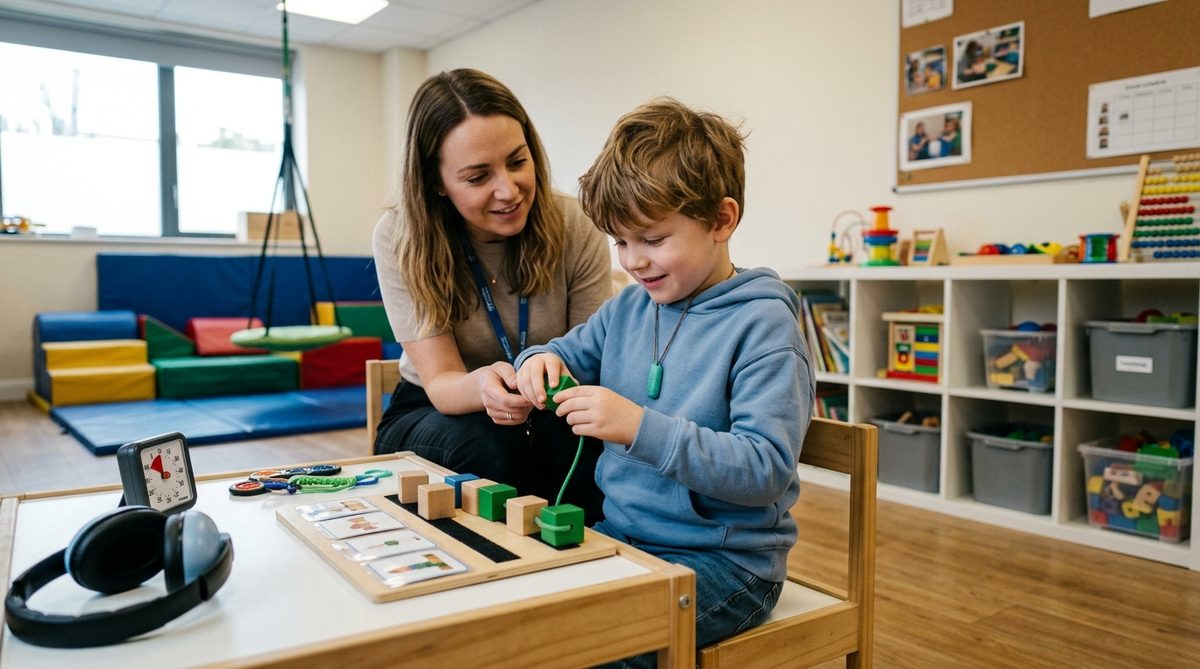
Yes. An autistic child can grow into an adult with a fulfilling life, though that life may not follow the path other people expect. Autism is a lifelong neurodevelopmental condition. Each child has a different mix of abilities, needs and interests. The diagnosis alone cannot tell you whether your child will work, form close relationships or live independently.
Useful support can help a child communicate, learn, manage daily tasks and take part in family or community life. Yet becoming less visibly autistic should not be the goal. A good life is better measured through safety, health, belonging, choice and the ability to express needs.
Some autistic adults manage most parts of life by themselves. Others need daily help with communication, personal care, decisions or safety. Many fall somewhere between those points. Each of these lives can have value, joy and purpose.
What does a good life look like for an autistic child?
A good life is one in which the child feels safe, understood and able to take part in things that matter to them. It may include close family bonds, trusted friends, enjoyable interests and growing control over daily choices. School results and paid work may form part of that picture, but they are not the whole picture.
The word “normal” often hides the real question a parent is asking: Will my child be happy, safe and able to cope as an adult? Those are useful questions. Comparing a child with one fixed social timetable is much less useful.
An autistic child may speak later than other children, communicate without speech or find busy social settings hard. The same child may have a sharp memory, deep knowledge of a favourite topic or a strong sense of fairness. Development can be uneven. A skill that seems advanced in one setting may sit beside a need for close help in another.
A child does not need to hide harmless autistic traits to have a good quality of life. Repeated movements, focused interests or a need for routine may help the child feel calm and organised. Trying to remove these traits for the comfort of other people can add stress without improving the child’s life.
Parents can define progress in concrete terms. Can the child show pain? Can they ask for a break? Do they have a way to refuse? Can they enjoy time with other people without being pushed past their limits? Can they take part in a routine with the right support? These questions reveal more than asking whether the child seems typical.
Why can two autistic children have very different futures?
Autism affects communication, sensory processing, social interaction and behaviour in different ways. Support needs also vary across places and stages of life. Two children with the same diagnosis may need very different help at home, at school and in the community.
One child may speak with ease but struggle to notice hunger, organise schoolwork or recover after a noisy day. Another may use few spoken words while understanding far more than people assume. A third may cope well in class and then become distressed at home after using all their energy to meet school demands.
This is why broad labels such as “high-functioning” can mislead. A label based on speech or school results may hide serious needs involving sensory distress, sleep, safety or mental health. It may also lead adults to deny support because the child appears capable. Labels that suggest low ability can cause a different harm by making people expect too little.
A strengths-and-needs profile gives families better information. It looks at communication, learning, movement, emotional regulation, personal care and daily living as separate areas. It also shows which environments help the child function well.
Support needs can change. A young child may need close help with language and play. A teenager may need more support with planning, social pressure or mental health. An adult who manages familiar routines may still need help during illness, a move or a change at work.
Other conditions can affect daily life too. Attention deficit hyperactivity disorder, developmental coordination disorder and depression are separate from autism, though an autistic person may also have them. A clinician should assess any concern rather than treating every difficulty as part of autism. Identifying the actual need allows the family to seek suitable care.
No single test can map a child’s whole adult life. A useful assessment describes the child now. It should guide current support without placing a ceiling on what the child may learn.
Which support helps without trying to erase autism?
The most useful support removes barriers to comfort, safety, communication and participation. It should build skills the child can use in real life. Goals must suit the child rather than force every autistic child through the same treatment plan.
Communication support may involve speech, signs, pictures, gestures or an electronic communication system. The aim is meaningful expression. A child needs ways to ask for help, share an idea, say no and report pain. Speech can be useful, but it is not the only valid form of communication.
Sensory support may include a quieter work area, comfortable clothing, planned breaks or changes to lighting. These adjustments do not spoil a child. They can make an activity accessible. Once distress drops, the child may have more capacity to listen, learn or join in.
Daily living goals can focus on dressing, eating, using transport, managing money or following a simple routine. A large task can be taught in clear steps. Visual prompts and repeated practice may help. The useful measure is whether the skill gives the child more choice, access or safety.
Early intervention can support skill development, but it cannot promise a set adult outcome. More therapy is not always better. A plan that fills every afternoon may leave little time for rest, play and family life. Support should be manageable and reviewed to see whether it is helping.
Meaningful goals sound like “can ask for a break before becoming overwhelmed” or “can take part in tooth brushing with less distress.” A goal such as “looks at adults during every conversation” may place appearance above comfort and communication. Eye contact can be painful or distracting for some autistic people. Listening does not always look the way others expect.
Parents should be wary of anyone who promises to cure autism or guarantee recovery. A reduction in visible autistic behaviour does not prove that a child feels better. The child may have learned to hide distress. That effort can be exhausting.
Qualified professionals can help families choose goals based on assessment and family priorities. Parents should ask what a therapy is meant to change, how progress will be measured and whether the child’s distress or refusal will be respected. If the plan does not improve a meaningful part of life, it deserves review.
What might school, friendships and work look like?
These parts of life can follow many valid paths. An autistic child may learn in a mainstream class, a specialist setting or a mix of both. The right choice is the setting in which the child can access learning, feel safe and receive suitable support.
School success depends partly on the fit between the student and the environment. Clear instructions may help a child who finds open tasks confusing. A quiet place may make attendance possible for a student who is overwhelmed by noise. Extra processing time can allow a capable student to show what they know.
Social life also varies. Some autistic children want several friends. Others prefer one close friend or more time alone. A friendship based on a shared interest can be as real as one built through frequent social events. The goal should be access to safe relationships, not a set number of friends.
Adults can teach practical social and safety skills without telling the child that their natural style is wrong. This may include recognising unsafe requests, setting boundaries and finding people who respect direct communication. The child also needs to know that saying no is allowed.
Further education may mean university, vocational training, workplace learning or lessons tied to daily life. Employment can include full-time work, part-time work, self-employment or supported work. Some adults may focus on community activities rather than paid employment. Contribution has more than one form.
An autistic adult may become a doctor, artist, technician, carer or business owner. Another may need ongoing help with basic tasks. Exceptional careers should never be used as the test of a worthy life. The better question is whether the person has a role that fits their skills, needs and preferences.
Accommodations often determine whether a setting works. Written instructions, predictable shifts, reduced sensory load or a clear contact person can turn an unsuitable workplace into an accessible one. Needing these changes does not make the person less capable. It means the environment has been adjusted so their ability can be used.
Parents can help by planning for the next transition rather than trying to predict every stage of adulthood. Visit a new school, practise a route or explain a change with pictures before it happens. Involve the child in each choice as far as their communication and understanding allow.
How can parents prepare for adult life now?
Build useful skills and a reliable support network over time. Independence is not an all-or-nothing state. An adult may complete some tasks alone, use reminders for others and ask a trusted person to help with major decisions.
Start with communication and self-advocacy. A child needs a reliable way to express comfort, pain, consent and refusal. As they grow, help them learn what autism means for them. Knowing their needs can make it easier to request a break, explain sensory distress or ask for written instructions.
Teach daily skills in ways that match the child’s ability. A young child might choose clothes or put one item in a school bag. An older child might follow a shopping list, prepare a simple meal or book an appointment with support. The aim is steady access to more choice, not forced independence.
Include health in long-term planning. Help the child recognise body signals and describe symptoms in the communication form they use. Keep clear records if they cannot explain their history. Mental health concerns also deserve direct assessment. Distress should not be dismissed as difficult behaviour.
Safety teaching should be clear and specific. Cover roads, water, online contact, private information and what to do when separated from a trusted adult. Repeat lessons in the places where the skill will be used. A child who can recite a rule may still need help applying it under stress.
Adult living arrangements may include living alone, sharing a home, staying with family or using supported living services. A person can have privacy and agency while receiving daily help. Complete self-reliance is not the only form of adulthood.
Build connections beyond one parent or caregiver. Trusted relatives, professionals, teachers and community members may form part of the support network. This gives the child more people who understand their communication and needs. It also reduces the risk that all practical knowledge sits with one person.
Transition planning should begin before school ends. Families can gather records, learn about adult services and identify skills that need direct teaching. The young person should take part in these talks in an accessible form. Their preferences should shape decisions about study, work, relationships and housing.
Use this simple plan:
- Choose one meaningful skill. Pick something that improves safety, communication, comfort or choice.
- Define the skill clearly. Replace “be more independent” with a task that can be seen and practised.
- Provide the right support. Use pictures, prompts, tools, extra time or help from another person.
- Practise in real settings. A skill becomes useful when the child can use it in daily life.
- Review the effect. Keep the goal if it helps the child. Change it if it adds distress without a clear benefit.
Choose one age-appropriate skill that would give your child more safety, comfort or choice, and begin teaching it in small, respectful steps.
Explore this topic: NDIS and disability guides. For tailored support, see NDIS personal training in Melbourne.

What not to do with an autistic child?
Read article →
Can level 1 autism live normal lives?
Read article →
How serious is level 1 autism?
Read article →
What are the signs of autistic behaviour?
Read article →
What Characteristics Does an Autistic Child Have? A Parent's Plain-English Guide in Melbourne
Read article →
What are stereotypical behaviors in autism?
Read article →Explore more Better Start guides
Use these topic hubs to keep reading related articles by condition, support need, or funding question.
NDIS & disability
Access, funding, planning, disability support, and eligibility guides.
Open hub →Lupus
Symptoms, diagnosis, flares, disability support, and daily life.
Open hub →Autoimmune disease
Symptoms, coping strategies, long-term health, and support options.
Open hub →Rheumatoid arthritis
Flares, treatments, daily living, disability support, and NDIS questions.
Open hub →Kidney disease
Kidney symptoms, kidney failure, dialysis, and support questions.
Open hub →Speech therapy
Therapy funding, stuttering, cleft palate, dyslexia, and communication support.
Open hub →