How to Choose an NDIS Personal Trainer: What to Ask Before You Book
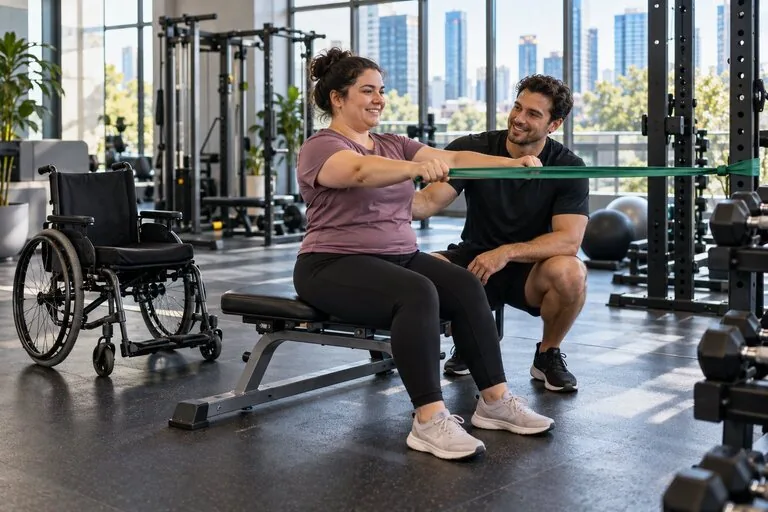
The right NDIS personal trainer adapts every session to your body, your communication style and your plan goals, and can explain clearly how they will do that before you book. Qualifications and insurance matter, but the bigger question is whether the trainer can change a session for the person in front of them.
This guide covers what to look for, what to ask, and how NDIS funding usually applies to personal training.
What should an NDIS personal trainer actually do?
A personal trainer working with NDIS participants should build a program around one person, not a template. Your ability, mobility and goals set the exercises, the pace and the equipment.
Common goals include:
- strength for standing, carrying and climbing stairs
- better balance and coordination
- confidence in a gym or at home
- a regular, supportive routine
- stamina for walking and transfers
- exercises you can repeat safely between sessions
Small, repeatable gains often matter more than big numbers. Standing up from a chair without help, carrying the shopping or walking to the local shops are the kinds of results worth tracking.
How should sessions adapt to different disabilities?
Ask any trainer how they would adjust a session for you specifically. A confident answer should sound something like this.
Autism: predictable routines and calm spaces
- the same warm-up and order each visit
- a spoken or visual outline of the session
- a heads-up before anything changes
- a quiet place to train, away from loud gym music
Intellectual disability: simple, repeatable instructions
- each movement demonstrated, not just described
- one plain instruction at a time
- familiar exercises built on slowly
Physical disability: exercise that fits your range of movement
- seated and supported versions of the main strength exercises
- light resistance that increases over time
- rest breaks that suit your energy
If you have poor mobility, our guide on how to exercise with poor mobility explains safe starting points you can discuss with a trainer.
What questions should you ask before choosing a trainer?
- How do you adapt exercises? Ask for an example of a session they changed for someone with similar needs.
- How do you communicate? Visual schedules, short instructions and check-ins should be normal, not extras.
- How do you track progress? Progress should be measured against where you started and linked to your plan goals.
- Are you qualified and insured? Ask to see a current Australian fitness qualification and professional insurance, including for sessions at home or in a park.
- Can my support worker join? The answer should be yes.
- Will you work with my allied health team? A good trainer will share notes with your physio, occupational therapist or GP so exercise fits your wider care.
- Can you change the plan on the day? Energy, pain and mood change. The session should too.
What does a good session look like?
Each session should follow a clear shape, so you always know what is coming next:
- a short check-in about energy, mood and any pain that day
- a gentle warm-up that suits your mobility
- the main exercises for strength, balance or movement skills
- a cool-down and a quick review of what went well
Your first meeting should be a relaxed consultation about your goals, your requirements and your current capacity. Bring your NDIS plan goals if you have them. If you have a complex health condition, the trainer may ask for GP clearance or input from an exercise physiologist first, which keeps your care joined up.
How does NDIS funding work for personal training?
The NDIS describes Improved Health and Wellbeing capacity building funding as support to improve physical and mental wellbeing. Its examples include an exercise physiologist for an exercise plan and a personal trainer to help you exercise safely and effectively. If the support meets the funding criteria, an appropriately qualified personal trainer can be funded this way, but not as a therapy support.
NDIS therapy supports guidance also says it will not fund gym or pool access or memberships. It may fund a support worker to help you use those facilities.
How your plan is managed matters too. If a plan manager handles your payments, the trainer invoices them for each session. Self-managed participants pay and claim themselves. Tell the trainer which applies to you when you enquire, and ask your support coordinator if you are unsure what your plan covers. Our guide to what disabilities are funded under the NDIS covers the broader eligibility rules.
How much does NDIS personal training cost?
Prices vary between providers, so ask for a clear per-session rate. As an example, NDIS Personal Trainer in Melbourne charges $120 per session for one-on-one training, which makes budgeting simple:
- two sessions: $240
- three sessions: $360
- four sessions: $480
Match these totals against the capacity building funding in your plan to see how many weeks of training it can carry.
Home, park or gym: where should you train?
Many participants prefer a mobile trainer, so there is no travelling to a studio. Sessions can happen in your living room, a nearby park, a gym you already use or a local community centre. Small group sessions can suit people who want company, though most participants start one-on-one.
In Melbourne, mobile services such as NDIS personal training in Melbourne cover suburbs including South Yarra, Glen Iris, Camberwell, Malvern, St Kilda, Southbank, Mentone, Springvale and Cranbourne.
What results can you aim for?
Goals should stay realistic and tied to your plan. Many participants aim for strength that makes daily tasks easier, or better balance so they feel steadier on their feet. Regular movement can also support mental health through routine, energy and a sense of achievement, and some people use their new confidence to join a walking group or local class. For ideas beyond training, see the best activities for adults living with disability.
Common questions
Can the NDIS pay for a personal trainer?
Possibly, if the support meets NDIS funding criteria. An appropriately qualified personal trainer may be funded under Improved Health and Wellbeing capacity building funding, but not as a therapy support. Your planner or support coordinator can confirm what your plan allows.
Does the NDIS pay for gym memberships?
No. NDIS guidance says it will not fund gym or pool access or memberships. It may fund a support worker to help you use those facilities.
Can my support worker come to training sessions?
A good trainer will welcome a support worker, carer or family member if that helps you feel comfortable. Mention it when you book so the session and space can be planned around them.
Do I need gym experience before starting?
No. Sessions should start from where you are today, with simple movements that build confidence before anything gets harder.
What if I have a bad day?
Tell your trainer. The plan should change on the day, with lower intensity, different exercises or gentle movement instead.
Explore this topic: NDIS and disability guides.
Explore more Better Start guides
Use these topic hubs to keep reading related articles by condition, support need, or funding question.