How to exercise with poor mobility?
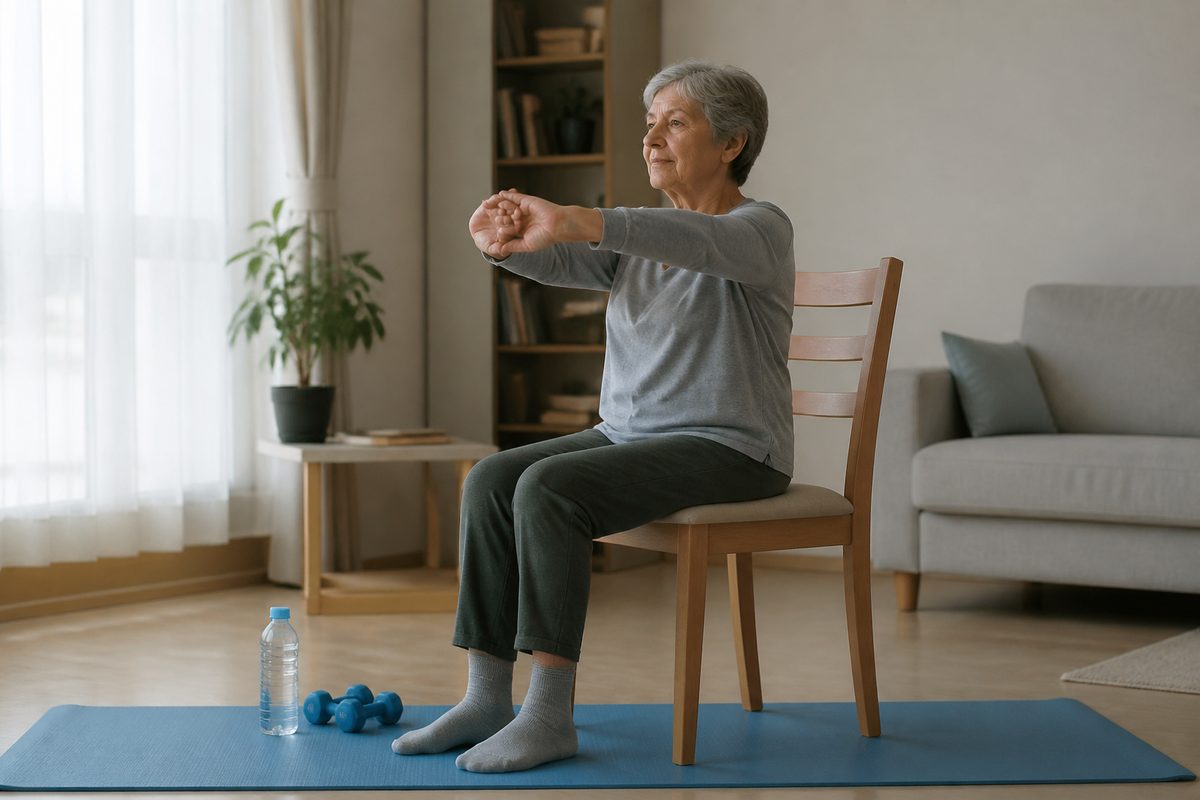
Exercise with poor mobility by choosing movements you can control, using steady support, and starting with short sessions that don't increase pain. You don't need full joint motion or the ability to stand for long. Your starting point might be seated movement, supported strength work, or gentle exercise in bed.
The main goal is to train the ability you have today. A useful exercise should feel safe, fit your current movement range, and help with a task that matters to you. That might mean getting out of a chair, reaching a shelf, moving around the kitchen, or feeling less stiff after sitting.
What should you check before starting?
First, find out why your mobility is poor. Joint stiffness, weak muscles, pain, low fitness, nerve problems, and fear of falling can all limit movement. Each cause calls for a different starting point.
Seek medical advice before starting if your mobility changed without a clear reason. Get help if movement causes chest pain, fainting, severe shortness of breath, new numbness, sudden weakness, or a hot and swollen joint. These signs need to be checked, not tested with a new workout.
An existing Injury also changes what's safe. Follow any limits set by your doctor, surgeon, or rehabilitation team. After a fracture or operation, for example, you may have rules about how much weight you can put through a limb.
how to work with people with learning disabilities Physical therapy may help when you need a hands-on check or support while getting a certain movement back.
An accredited exercise physiologist can then build a longer exercise plan around a health condition, disability, or lasting mobility limit. This is where Exercise physiology can turn a broad goal such as “get stronger” into safe steps you can measure.
How do you choose a safe starting level?
Choose an exercise position that lets you stay steady without gripping hard or holding your breath. Start in a firm chair if standing feels unsafe. Exercise in bed if sitting upright takes too much energy.
Use a kitchen bench or fixed rail for support when you're ready to stand.
Try this simple test: could you repeat the movement with the same control? If the first repetition is smooth but the fifth makes you twist, jerk, or lose balance, stop before your form slips.
Poor mobility often makes the body borrow movement from somewhere else. A stiff hip may make the lower back twist, while a weak shoulder may tense the neck. A smaller, cleaner movement is more useful than forcing a big range.
Use the talk test to judge effort. During light exercise, you should be able to speak a full sentence. During moderate work, talking should take more effort, but you should still be able to answer.
Stop if you become dizzy, confused, clammy, or unable to catch your breath.
In my experience, people often start too hard because five minutes seems too short to count. What I found was simple: a five-minute session you can repeat builds more capacity than one hard session followed by several painful days. Frequency comes before intensity.
Which movements build useful strength?
Train movements that help with daily life. Begin with one set of five to eight controlled repetitions. Rest, then decide if another set feels safe.
Use a light resistance band, a small weight, or the weight of your own limbs.
Seated knee straightening
Sit back in a firm chair with both feet supported. Slowly straighten one knee until the leg reaches a comfortable height. Pause, then lower it with control.
This strengthens the front of the thigh, which helps with standing and using stairs.
Seated marching
Lift one foot a short distance from the floor. Lower it, then switch sides. Keep your chest upright and try not to lean.
If lifting the whole foot is too hard, raise the heel while keeping your toes down.
Supported sit-to-stand practice
Use a firm chair that won't slide. Move toward the front, place your feet where they feel secure, and lean forward from the hips. Push through the armrests if you need to.
Stand only as high as you can control, then sit down slowly. A higher chair or firm cushion can make the movement shorter.
Wall or bench push
Place your hands on a wall or solid bench. Bend your elbows and bring your chest a little closer to the support. Press away without locking your elbows.
Standing farther from the wall makes the exercise harder. Do it seated with a resistance band if standing isn't safe.
Grip and hand work
Squeeze a rolled towel gently, then release your grip fully. You can also open your fingers against a loose elastic band. Stop if you feel sharp pain in your fingers or wrist.
Hand strength can make dressing, preparing food, and handling mobility aids easier.
One point many exercise guides miss: the lowering phase matters. Sitting down slowly or lowering a weight with control trains your muscles to manage body weight. This can build confidence during transfers, even when standing strength is still limited.
How can you work on joint movement without forcing it?
Move each joint through a range that feels comfortable. Don't push into sharp pain or bounce the movement. Gentle motion may feel stiff at first, but it should ease as the joint warms up.
For the ankles, point your toes away and then draw them back. Make small circles if they feel smooth. For the shoulders, slide your hands forward on a table instead of lifting your arms against gravity.
For the upper back, sit tall and turn your chest a small amount while keeping your hips facing forward.
Breathe slowly. Breathe out during the harder part of the movement, and don't strain. This helps control pressure inside the chest and may ease muscle tension you don't need.
The reason regular movement helps comes from basic Physiology, which is how the body works. Muscles lose strength when they're used less. Joints can feel stiffer after staying in one position for a long time.
The heart and lungs also adjust to the amount of work placed on them. Small, repeated bursts of activity give the body a reason to keep or build capacity.
More range isn't always better. If extra movement makes a joint less steady or raises pain for hours, use a smaller range. The useful range is the one you can control and use in daily tasks.
What can you do when standing is unsafe?
You can train your upper body, trunk, legs, and circulation while sitting or lying down. Put the chair against a wall if it may slide. Use a chair with a back and armrests.
Avoid stools and chairs with wheels.
Try short rounds of arm reaches, heel lifts, knee movements, and light band pulls. If one side has less control, support that limb with your other hand or rest it on a smooth surface. A towel under your foot can make sliding movements easier.
For exercise in bed, bend and straighten one knee within a comfortable range. Slide one heel away, then bring it back. Press the back of your knee gently into the mattress, then relax.
You can also reach your arms toward the ceiling if your shoulders allow it.
If you use a wheelchair, check the brakes and clear the space around the footplates. Repeated chair propulsion can put strain on the shoulders, so add gentle pulling movements when you can. A resistance band secured by a trained professional may help, but never attach it to furniture that could move.
One of my clients could manage only two minutes of seated movement before tiredness changed her posture. We split her exercise into brief blocks after breakfast and lunch. Within several weeks, she could finish a longer block without leaning on the chair.
The useful change came from planned repetition, not one exhausting workout.
How should pain guide your exercise?
Use pain as information. Mild muscle effort or a gentle stretching feeling may be fine. Sharp pain, catching, sudden joint pain, or pain that changes how you move means you should stop and adjust.
Check how you feel during exercise, one hour later, and the next morning. If your symptoms are still clearly worse the next day, reduce the next session. Try fewer repetitions, less resistance, or a smaller range.
Change one part at a time so you can work out what caused the reaction.
Don't judge safety by pain alone. Some nerve conditions reduce feeling, and poor balance can create risk without causing pain. Use steady support and follow clinical advice if your feeling or coordination is impaired.
A common mistake is waiting for every symptom to disappear. That can cause more weakness and make normal tasks harder. A better approach is to work below the level that brings on a lasting flare.
On a bad day, shorten the session instead of pushing through the full plan.
How do you add heart and lung exercise?
Start with a steady, repeated movement that uses large muscles. Options include seated marching, repeated arm movement, a pedal exerciser, supported stepping, or supervised water exercise. Pick a form that lets you stay stable.
Begin with one to five minutes. You can split the work into short blocks across the day. Add time before adding speed or resistance.
For example, move from four minutes to five minutes while keeping the same pace.
A pool can reduce the amount of body weight placed through painful joints. It also adds resistance in every direction. But getting into the pool still matters.
Use a ramp, hoist, or safe steps, and ask if trained staff are there. Water exercise is a poor choice if getting in or out creates a fall risk.
Exercise doesn't have to look like a formal workout. Repeated trips through the house, light gardening from a steady seat, or moving your arms to music can raise your activity. What matters is planned effort, with enough rest to keep each movement safe.
How can you reduce the risk of falling?
Clear loose rugs, cords, pets, and small furniture from the exercise area. Wear shoes that fit well and grip the floor. Keep your phone or alert device within reach.
If you're standing, exercise near a solid support.
Don't use a walking frame as exercise support unless a clinician has shown you how. Some frames can roll or tip when pushed the wrong way. A fixed bench may be safer for supported standing.
Balance work should fit your current ability. Start by shifting a small amount of weight from side to side while holding a fixed surface. Use less hand pressure only when you can stay upright without making a sudden grab.
Don't close your eyes or stand on an unstable cushion unless a clinician is watching you.
Tiredness raises your risk of falling. Finish standing exercise while you still have enough energy to get back to your chair safely. Many plans miss this part.
The session includes getting into position and returning to rest.
How often should you train?
Start with mobility work on most days if it doesn't increase your symptoms. Strength work may begin on two non-consecutive days each week. Light heart and lung exercise can be spread across several days in short blocks.
Build up slowly. Add one or two repetitions, a little more time, or slightly more resistance. Don't increase every part in the same week.
Your body needs a clear, manageable reason to adapt.
Keep a simple record. Write down the exercise, number of repetitions, effort level, and how you felt the next morning. Track one daily task too.
You might record how many times you paused while dressing or whether you could stand long enough to make a drink. These signs often show useful progress before a workout starts to feel easy.
Setbacks happen after illness, poor sleep, or a pain flare. Go back to the last level you could complete with good control. Building from a known level is safer than testing your limit.
When should a professional change the plan?
Get professional help if you have repeated falls, worsening weakness, severe pain, or no clear progress after several weeks. Help is also wise if you use oxygen, have unstable heart symptoms, or need another person to help with transfers.
Bring your exercise record to the appointment. Show which movements cause symptoms and how long those symptoms last. Ask the professional to link each exercise to a task you want to improve.
A plan is easier to follow when you know why each movement is there.
Stop and seek urgent care for chest pressure, fainting, sudden trouble speaking, a sudden severe headache, or new weakness on one side. Don't try to exercise through these signs.
What should you do today?
- Choose a stable chair or fixed support.
- Pick one controlled strength movement and one gentle joint movement.
- Complete five repetitions of each, stopping before your form changes.
- Record how you feel now and again tomorrow morning.
Start with five controlled minutes today, then repeat that safe dose before you make it harder.
Common questions
How can I exercise if I have limited mobility?
Try seated movements, gentle stretches, or light weights that match your ability. Start slowly, use a stable chair, and stop if you feel pain or dizzy.
What is the best exercise if you can't walk?
Chair exercises are a safe choice because you can move your arms, legs, and body while seated. Swimming or water exercise may also work if you have safe help getting into the pool.
What are some exercise ideas for seniors with limited mobility?
Seniors can try chair marching, arm raises, ankle circles, gentle stretching, and light hand weights. Short sessions several times a day can make exercise easier to manage.
What can a person with very limited mobility do to keep active?
Small movements such as opening the hands, lifting the arms, turning the ankles, or changing position can help. A doctor or physical therapist can suggest safe movements based on the person's needs.
Explore this topic: NDIS and disability guides. For tailored support, see NDIS personal training in Melbourne.

What not to do with an autistic child?
Read article →
Can an autistic child live normal life?
Read article →
Can level 1 autism live normal lives?
Read article →
How serious is level 1 autism?
Read article →
What are the signs of autistic behaviour?
Read article →
What Characteristics Does an Autistic Child Have? A Parent's Plain-English Guide in Melbourne
Read article →Explore more Better Start guides
Use these topic hubs to keep reading related articles by condition, support need, or funding question.
NDIS & disability
Access, funding, planning, disability support, and eligibility guides.
Open hub →Lupus
Symptoms, diagnosis, flares, disability support, and daily life.
Open hub →Autoimmune disease
Symptoms, coping strategies, long-term health, and support options.
Open hub →Rheumatoid arthritis
Flares, treatments, daily living, disability support, and NDIS questions.
Open hub →Kidney disease
Kidney symptoms, kidney failure, dialysis, and support questions.
Open hub →Speech therapy
Therapy funding, stuttering, cleft palate, dyslexia, and communication support.
Open hub →