What are stereotypical behaviors in autism?
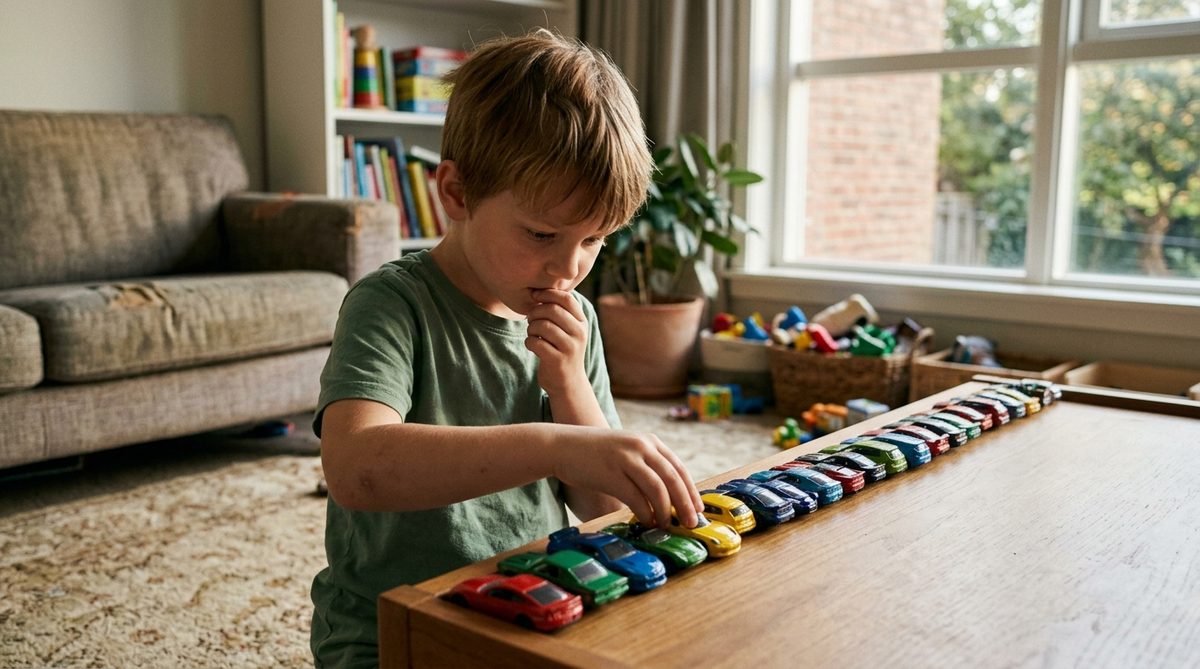
Stereotypical behaviors in autism are repeated movements, sounds, speech patterns, ways of using objects, routines, or focused interests. Examples may include hand flapping, rocking, repeating a phrase, spinning a toy, lining up objects, or following the same sequence each day. Clinicians often call these stereotyped behaviors, stereotypic behaviors, or stereotypies. Some may also be called stimming.
These actions are not always harmful or meaningless. A repeated movement may feel good, help someone manage sensory input, express excitement, or make an uncertain moment feel more predictable. The same action can have a different meaning for another person. Its purpose may also change with the setting.
No single repetitive behavior proves that a child or adult is autistic. People who are not autistic may rock, pace, repeat words, tap objects, or follow firm routines. Autism assessment considers a much wider pattern of development, communication, social interaction, sensory experience, and behavior.
What does “stereotyped behavior” actually mean?
In this context, stereotyped means that an action has a repeated or recognisable form. It does not mean a stereotype about autistic people. Those are separate ideas.
A stereotype makes a broad assumption about a group, such as assuming that every autistic person avoids eye contact or has the same skills. Stereotypy describes an observed pattern. For example, a person may repeatedly move their fingers in the same way when waiting.
Even the word “repeated” needs care. A person might flap their hands for a few seconds during an exciting game. Another might rock for much of a noisy bus ride. Frequency, intensity, setting, and effect provide more useful information than the movement alone.
The clearest way to discuss a behavior is to describe what can be seen or heard. “Sam rocks forward and back while the room is noisy” gives more information than “Sam has stereotypical behavior.” A specific description leaves room to ask what the action means to Sam.
Terms such as stereotypy, stimming, repetitive behavior, and self-stimulatory behavior overlap, but people do not always use them in exactly the same way. “Stimming” is common in everyday discussion and often refers to repeated sensory actions. “Stereotypic behavior” is more common in clinical or research writing. Neither label explains the reason for an action.
Which repeated movements might people notice?
Movement-based stereotypies are often the most visible form. Possible examples include:
- Flapping hands or moving fingers in a repeated pattern
- Rocking the body forward and back
- Pacing along the same route
- Spinning the body or turning in circles
- Bouncing while standing or sitting
- Repeatedly tensing the hands, face, or another body part
- Swaying from side to side
- Jumping during excitement
- Repeatedly touching a surface or part of the body
Some of these are semi-voluntary repetitive movements. A person may be able to pause one when asked, yet stopping may take effort or remove something useful. The ability to suppress a movement does not show that it lacks value.
The appearance of a movement cannot reveal its function. Hand flapping may happen during joy, sensory overload, deep focus, or anticipation. Rocking may offer steady sensory feedback. Pacing may occur while someone thinks or waits. These are possible meanings, not rules.
Context often gives the best clues. Notice what happened before the movement, what was happening around the person, and what changed after it. Did the room become louder? Did an expected plan change? Did the person appear more settled after moving? Observation should remain open to the person’s own explanation.
A hypothetical example shows why this matters. A child starts bouncing near the gate at a playground. An observer might assume the child is upset. The child may instead be excited because a favourite activity is about to begin. Trying to stop the bouncing based on appearance alone could turn a happy moment into a stressful one.
The key question is not whether a movement looks unusual. Ask whether it causes pain, creates immediate danger, blocks an essential activity, or signals distress. A harmless movement may need space rather than correction.
Can repetition appear in speech and communication?
Yes. Stereotyped language can include repeated sounds, words, phrases, questions, or longer scripts. A child might repeat part of a video, use the same phrase in several settings, echo words they have just heard, or return to a familiar question.
Repeated speech may still communicate. A familiar script might express a need, mark a feeling, keep an interaction going, or help the speaker process what was said. Its meaning may come from the situation rather than the literal words.
Suppose, in a hypothetical example, a child says “Time to go home” whenever a room becomes loud. The phrase may have come from a familiar show. In that setting, it could be the child’s way of asking to leave. Treating it as random repetition would miss the message.
Supporters can look for patterns without demanding an immediate explanation. When does the phrase occur? Who is present? Does the person look toward an item, place, or activity? What response seems to help? If the person uses another communication method, such as gestures or a communication device, that information matters too.
Repeated questions can also serve more than one purpose. A person may want the answer, enjoy the exchange, seek reassurance, or use the question to begin contact. Answering once and then exploring the need behind the question is often more useful than assuming defiance.
How can stereotypy appear during play or object use?
Repetition may appear in how someone explores toys or everyday objects. A child may spin the wheels of a toy car, roll a ball along the same path, arrange figures in a precise order, open and close a door, or watch light move across an object.
Adults sometimes call this play “nonfunctional” because it differs from the expected use of the toy. That label can hide what the child is doing. The child may be studying motion, sound, shape, texture, or cause and effect. They may also be enjoying a predictable sensory experience.
Look closely before redirecting the activity. Is the child calm and engaged? Are they testing small changes? Do they invite another person to watch or join? Does the play support learning or enjoyment? Purpose is not always obvious from the outside.
There may still be reasons to widen play. A parent or supporter can join the existing activity and add a small option without removing the preferred one. If a child repeatedly rolls a ball down a ramp, an adult might offer another surface or take turns. The goal is to create access to more experiences while respecting the activity the child already values.
How do routines and focused interests fit in?
Autism-related repetition can extend beyond visible movements. A person may prefer a familiar route, follow a fixed order when getting dressed, eat foods in a set sequence, or become upset when an expected plan changes. Someone may also return often to a specific topic, object, or type of information.
A routine is a preferred sequence. It can reduce the number of surprises in a task and make daily life easier to manage. A focused interest is sustained attention to a subject or activity. It can provide enjoyment, knowledge, connection, or a reliable way to recover after a hard day.
Neither should be treated as a problem because it is intense or unusual. The practical effect matters. A detailed interest may support conversation and learning. A routine may help someone complete a difficult morning. Support becomes more relevant when change brings severe distress, when the pattern prevents essential care, or when the person wants help becoming more flexible.
Preparation can reduce strain when a routine must change. Clear notice, visual information, and a workable alternative may help. Sudden removal of the routine gives no information about why it mattered and may increase distress.
Are stereotypies, perseveration, and compulsions the same?
No. These terms can describe actions that look similar, but they do not name the same experience.
A stereotypy usually refers to a repeated action, sound, or pattern. A routine is an expected sequence. Perseveration describes difficulty shifting away from an action, answer, idea, or topic after it is no longer useful in that moment. A compulsion is commonly linked to a felt urge or perceived need to perform an action.
For example, repeated hand washing can have several possible meanings. A person might enjoy the sensation of water, follow a learned routine, remain stuck on one step of a task, or feel driven to wash because of a feared outcome. The visible act is the same, but the internal experience is different.
Repetition alone does not establish obsessive-compulsive disorder. A qualified assessment looks at context, distress, time taken, the person’s account, and the wider pattern. This is especially useful when an action appears driven by fear, causes marked distress, or takes over daily life.
Questions work better than assumptions. If the person can answer, ask what happens if they stop, whether the action feels pleasant or unwanted, and what support they want. For someone who does not communicate through speech, careful observation and familiar communication methods can help others understand the pattern.
Why might an autistic person repeat a behavior?
There is no single reason. Repetition may provide sensory input, lower the strain of an overwhelming setting, express emotion, support concentration, make time feel predictable, or communicate a need. It may also be simple enjoyment.
Meaning can change from one moment to another. Pacing at home may help a person think. Faster pacing in a crowded space may signal growing stress. A repeated phrase may be playful in one setting and a request for help in another.
This is why stopping the visible action should not be the first goal. If the action meets a sensory or communication need, removing it without another option can leave that need unmet. The better starting point is to understand what the behavior does for the individual.
Observation should also include the environment. Noise, bright light, waiting, unclear instructions, pain, fatigue, and unexpected change may affect repetition. The behavior is often the most visible part of a larger situation.
When does a repetitive behavior need support?
Use four checks: safety, distress, participation, and autonomy.
Does it cause injury or immediate danger?
Act when a behavior causes injury or puts the person or others at immediate risk. Move hazards where possible and seek urgent professional help when danger cannot be managed safely. The aim is protection, followed by understanding what led to the event.
Is the person distressed?
Look beyond the movement itself. Changes in expression, communication, breathing, withdrawal, or attempts to escape may offer context. Ask the person directly when possible. A repeated action that brings comfort should not be confused with one that occurs during severe distress.
Does it block an essential activity or communication?
Support may help when repetition prevents sleep, eating, personal care, learning, travel, or access to communication. The response should target the barrier. It should not aim to make the person appear less autistic.
Does the response respect the person’s autonomy?
Include the autistic person in decisions in a form they can access. Ask what they want to keep, what feels difficult, and what outcome would help. Harmless stimming may need acceptance or a suitable space. A risky action may require a safer way to meet the same need.
When support is needed, record what happened before, during, and after the behavior. Note changes in the setting and any communication attempts. Share specific observations with an appropriately qualified clinician rather than offering a broad label.
Start today by describing one repeated behavior without judging it, then check its effect on safety, distress, participation, and the person’s own wishes before deciding whether to intervene.
Explore this topic: NDIS and disability guides. For tailored support, see NDIS personal training in Melbourne.
What not to do with an autistic child?
Read article →
Can an autistic child live normal life?
Read article →
Can level 1 autism live normal lives?
Read article →
How serious is level 1 autism?
Read article →
What are the signs of autistic behaviour?
Read article →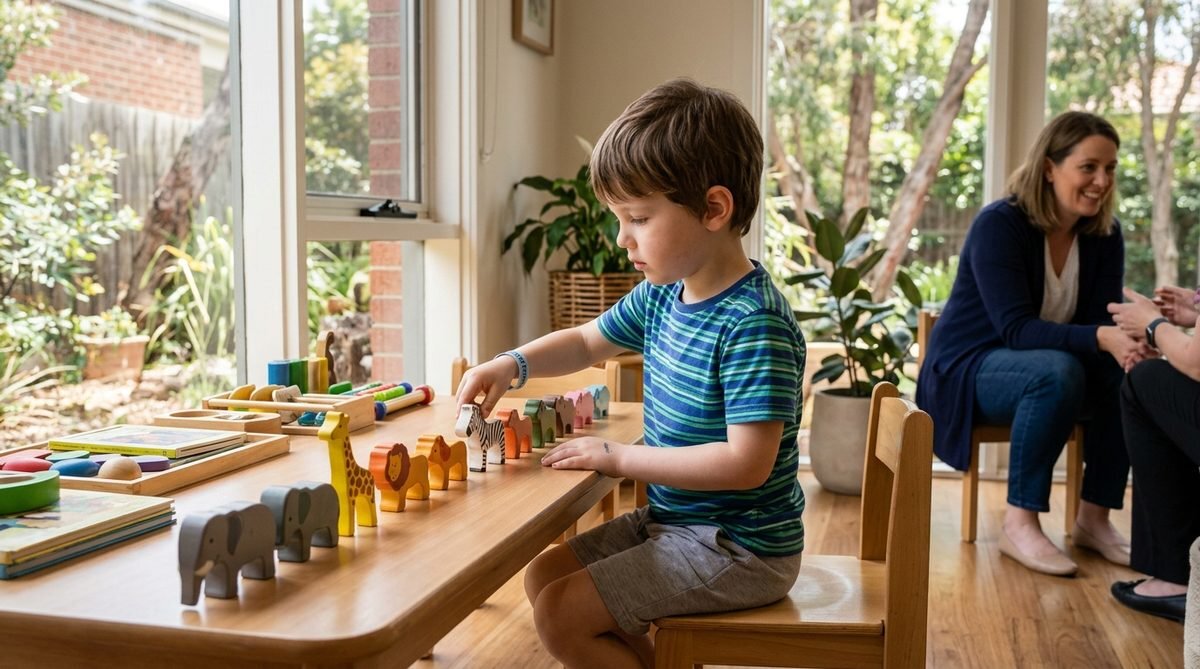
What Characteristics Does an Autistic Child Have? A Parent's Plain-English Guide in Melbourne
Read article →Explore more Better Start guides
Use these topic hubs to keep reading related articles by condition, support need, or funding question.
NDIS & disability
Access, funding, planning, disability support, and eligibility guides.
Open hub →Lupus
Symptoms, diagnosis, flares, disability support, and daily life.
Open hub →Autoimmune disease
Symptoms, coping strategies, long-term health, and support options.
Open hub →Rheumatoid arthritis
Flares, treatments, daily living, disability support, and NDIS questions.
Open hub →Kidney disease
Kidney symptoms, kidney failure, dialysis, and support questions.
Open hub →Speech therapy
Therapy funding, stuttering, cleft palate, dyslexia, and communication support.
Open hub →