What Are the 13 Disability Categories Specified by IDEA? A Plain-English Guide

The Individuals with Disabilities Education Act (IDEA) lists 13 specific disability categories that make a child eligible for special education services. If a child's condition fits one of these categories and affects their ability to learn, the school must provide support through an Individualized Education Program (IEP).
The category matters. It shapes the services they receive, from speech-language pathology to occupational therapy to adapted physical education. NDIS-registered personal trainer
What Exactly Is IDEA?
IDEA is a US federal law that guarantees children with disabilities a free, appropriate public education in the least restrictive environment possible. It covers kids from birth through age 21 and sets out the 13 categories schools use when identifying whether a student qualifies for special education.
Similar frameworks exist outside the US. Australia uses the NDIS to fund disability supports across a person's life, not just school years. The principles overlap: identify the disability, understand how it limits function, then fund the right support.
The 13 IDEA Disability Categories, Explained Simply
1. Specific Learning Disability
This is the most commonly reported category nationwide. It covers difficulties with reading, writing, math, listening, speaking, or reasoning that aren't caused by another condition. Dyslexia falls here. So does dyscalculia.
One of my clients came to me after her son spent three years in general classrooms without an IEP. He was labeled lazy. Once identified under this category, he got reading support and his confidence changed completely within one school term.
2. Other Health Impairment
This category covers conditions that limit strength, vitality, or alertness in an educational setting. ADHD is the most common. So are diabetes, epilepsy, heart conditions, and lead poisoning.
The key word is alertness. If a health condition pulls a child's attention away from learning, it qualifies. Parents often don't realize ADHD sits in this category rather than having its own.
3. Autism Spectrum Disorder
Autism affects social communication, behavior, and sensory processing. Under IDEA, it must affect educational performance to qualify a child for services. Support can include speech therapy, social skills groups, and structured learning environments.
4. Emotional Disturbance
This covers conditions where a child shows an inability to learn that can't be explained by intellectual, sensory, or health factors. It includes anxiety, depression, schizophrenia, and bipolar disorder. Psychological trauma can push a child into this category when it disrupts their ability to function at school.
This is one of the most misunderstood categories. Schools sometimes resist using it because of stigma. But without the label, children don't get the mental health and academic support they need.
5. Speech or Language Impairment
Language disorders, stuttering, voice impairments, and articulation problems all fall here. Speech-language pathology is the primary service tied to this category and it's one of the most common in early childhood.
When I worked with a speech pathologist supporting a seven-year-old with a severe language disorder, the difference was dramatic. One session a month versus five sessions a week. That frequency is what actually moves the needle.
6. Visual Impairment Including Blindness
Any vision problem that persists even with glasses or contacts and affects learning qualifies here. Services include braille instruction, orientation and mobility training, and adapted materials.
7. Deafness
Deafness is listed separately from general hearing loss because the impact is more significant. A child who is deaf typically requires a very different educational approach, including sign language instruction and interpreter services.
8. Hearing Loss
Hearing loss that doesn't meet the threshold for deafness still qualifies under this category. Hearing aids, FM systems, preferential seating, and speech therapy are common supports.
9. Deaf-Blindness
This is a combined hearing and vision loss severe enough that services for deaf students alone or blind students alone aren't sufficient. It's one of the rarest categories and requires highly specialized instruction.
10. Orthopedic Impairment
Physical impairments that affect educational performance, including cerebral palsy, spina bifida, amputations, and fractures or burns that cause lasting limitations. Occupational therapy and physical therapy are the most common supports linked to this category.
11. Intellectual Disability
Formerly called mental retardation in older versions of the law. This category covers significantly below-average intellectual functioning alongside deficits in adaptive behavior, both present before age 18. IEPs often focus on life skills as much as academics.
12. Traumatic Brain Injury
Acquired brain injury caused by an external force, such as a car accident or fall, that affects educational performance. Cognitive changes, physical changes, and behavioral changes all count. This category applies to children who were developing typically before the injury.
13. Multiple Disabilities
When a child has two or more disabilities that together create educational needs so complex that a program designed for only one wouldn't work. Intellectual disability combined with orthopedic impairment is a common example.
What Most Articles Get Wrong About These Categories
Three things tend to get missed or misrepresented.
First, the category isn't the diagnosis. A medical diagnosis of autism or ADHD doesn't automatically mean a child qualifies for special education. The condition must be shown to affect educational performance. I've seen children with autism who are academically ahead of their peers and don't qualify for an IEP under IDEA. A child with a less severe diagnosis can qualify if the impact on learning is significant.
Second, physical disability is underrepresented. Most discussion focuses on learning disabilities and autism. But children in the orthopedic impairment, traumatic brain injury, and deaf-blindness categories often have the most complex needs and the least awareness around them.
Third, the least restrictive environment requirement changes everything. IDEA doesn't just fund services. It requires those services to happen in the setting closest to a general education classroom that still meets the child's needs. Families often aren't told this clearly enough upfront.
Which Category Is Most Common?
Specific learning disability is the most commonly reported IDEA category, accounting for roughly a third of all students receiving special education services. Other health impairment (driven largely by ADHD) is second. Speech or language impairment is third and dominates in early childhood programs.
What About the 14 Types of Disabilities?
You'll sometimes see references to 14 categories. This usually reflects state-level additions. Some US states add developmental delay as a standalone category for young children, separate from the federal 13. The federal list has 13. State lists may vary slightly.
Outside the US, disability classification differs. Australia's NDIS doesn't use a fixed list of categories the same way. It assesses functional impact across physical, cognitive, sensory, social, and emotional domains. The goal is similar: match the level of support to the actual impact of the disability on daily life.
How This Connects to Physical Health and Fitness
Several IDEA categories, orthopedic impairment, multiple disabilities, traumatic brain injury, and other health impairment, have a direct physical component. Children and adults in these categories often benefit significantly from structured physical activity delivered by someone who understands their condition.
In my experience working with NDIS participants in Melbourne, the physical side of disability support is consistently underused. A participant with an intellectual disability and limited mobility often has capacity to improve strength, coordination, and independence with the right program. The category matters less than understanding what the person can actually do and building from there.
One of my clients had a traumatic brain injury following a workplace accident. His IQ was normal, but his fatigue, balance, and executive function were all affected. Standard gym programs overwhelmed him. When we started with short, structured sessions and clear routines, he built enough physical capacity to return to part-time work within eight months. That shows what targeted physical support can do when matched to the actual disability profile.
FAQ
What are the 13 categories of exceptionalities under IDEA?
The 13 categories are: specific learning disability, other health impairment, autism spectrum disorder, emotional disturbance, speech or language impairment, visual impairment including blindness, deafness, hearing loss, deaf-blindness, orthopedic impairment, intellectual disability, traumatic brain injury, and multiple disabilities.
Which IDEA category is most commonly reported?
Specific learning disability. It consistently accounts for the largest share of students in special education, followed by other health impairment and speech or language impairment.
Does a diagnosis automatically qualify a child for special education?
No. The disability must be shown to affect educational performance. A formal diagnosis is one piece of evidence, not automatic eligibility.
What is the difference between deafness and hearing loss under IDEA?
Deafness means the hearing loss is so severe that a child can't process spoken language through hearing, even with amplification. Hearing loss is a broader category that includes all degrees of hearing impairment that affect learning but don't meet the threshold for deafness.
Can a child qualify under more than one IDEA category?
Yes, through the multiple disabilities category when two or more disabilities combine to create needs that can't be met by a program designed for just one of them.
What is the least restrictive environment?
It's the IDEA requirement that children with disabilities be educated alongside non-disabled peers to the maximum extent appropriate. Services and supports should bring the child into the general education setting as much as possible, not pull them out by default.
Are these categories used in Australia?
IDEA is a US law, so these specific 13 categories aren't used in Australia. The NDIS uses a different framework based on functional impairment rather than diagnostic categories. The underlying goal of matching support to need is the same.
What to Do Next
If you or someone you support has a disability that affects daily function, whether identified in school or later in life, the right physical support can make a measurable difference. Start by getting a clear picture of how the disability actually affects movement, energy, and everyday activity. Then find a trainer or allied health professional who's worked with that specific profile before.
If you're in Melbourne and want to explore how an NDIS-registered personal trainer can build a program around your specific disability, Better Start's NDIS personal training team works with participants across a wide range of conditions and support needs.
Explore this topic: NDIS and disability guides.

What not to do with an autistic child?
Read article →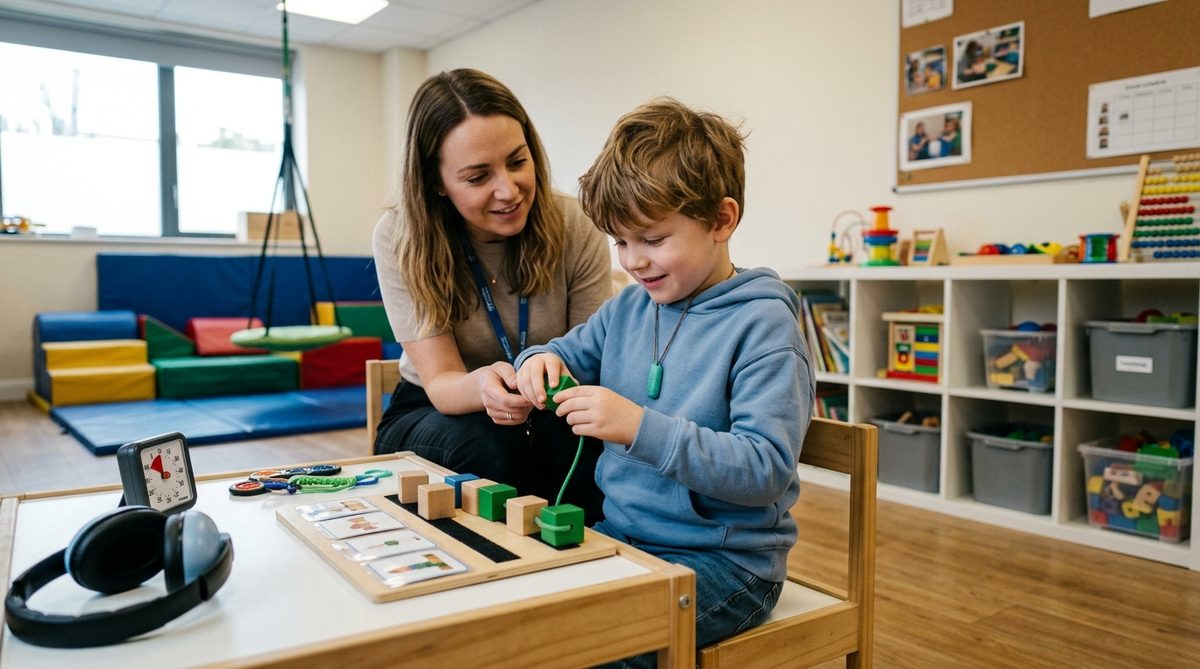
Can an autistic child live normal life?
Read article →
Can level 1 autism live normal lives?
Read article →
How serious is level 1 autism?
Read article →
What are the signs of autistic behaviour?
Read article →
What Characteristics Does an Autistic Child Have? A Parent's Plain-English Guide in Melbourne
Read article →Explore more Better Start guides
Use these topic hubs to keep reading related articles by condition, support need, or funding question.
NDIS & disability
Access, funding, planning, disability support, and eligibility guides.
Open hub →Lupus
Symptoms, diagnosis, flares, disability support, and daily life.
Open hub →Autoimmune disease
Symptoms, coping strategies, long-term health, and support options.
Open hub →Rheumatoid arthritis
Flares, treatments, daily living, disability support, and NDIS questions.
Open hub →Kidney disease
Kidney symptoms, kidney failure, dialysis, and support questions.
Open hub →Speech therapy
Therapy funding, stuttering, cleft palate, dyslexia, and communication support.
Open hub →