What Are the 7 Signs of Lupus? Symptoms, Diagnosis and What to Do Next
Lupus is one of those conditions that hides in plain sight. The symptoms look like a dozen other things, they come and go, and most people spend months or years not knowing what is wrong. What I found in reviewing the research is that lupus does not follow a neat checklist. It is a disease with variable, multisystem manifestations that can affect almost any organ in the body [5].
So when people ask about the 7 signs of lupus, what they are really asking is: what should I be watching for? That is the right question. Here is a direct, evidence-grounded answer.
What Are the Most Common Early Signs of Lupus?
Early lupus does not always look like textbook lupus. Up to half of cases start with symptoms that are real and disruptive but not yet enough to meet formal diagnosis criteria. Researchers call this incomplete SLE, and it can be just as clinically serious as a confirmed diagnosis [1].
In children and adolescents, the most documented early symptoms are fever, fatigue, weight loss, arthritis, rash, and kidney involvement [3]. Adults follow similar patterns. What I saw in the literature is that neurological symptoms, things like headaches, confusion, or mood changes, can also appear early, sometimes before the more recognisable signs show up [4].
The seven signs most commonly associated with lupus are:
- A butterfly-shaped rash across the cheeks and nose
- Joint pain and swelling
- Extreme fatigue
- Fever with no clear cause
- Hair loss
- Sensitivity to sunlight
- Kidney problems, including swelling or changes in urination
These are not a definitive diagnostic checklist. Lupus is heterogeneous, meaning it presents differently in different people [5]. But these are the patterns that show up most consistently in the research and in clinical practice.
What Does a Lupus Rash Look Like?
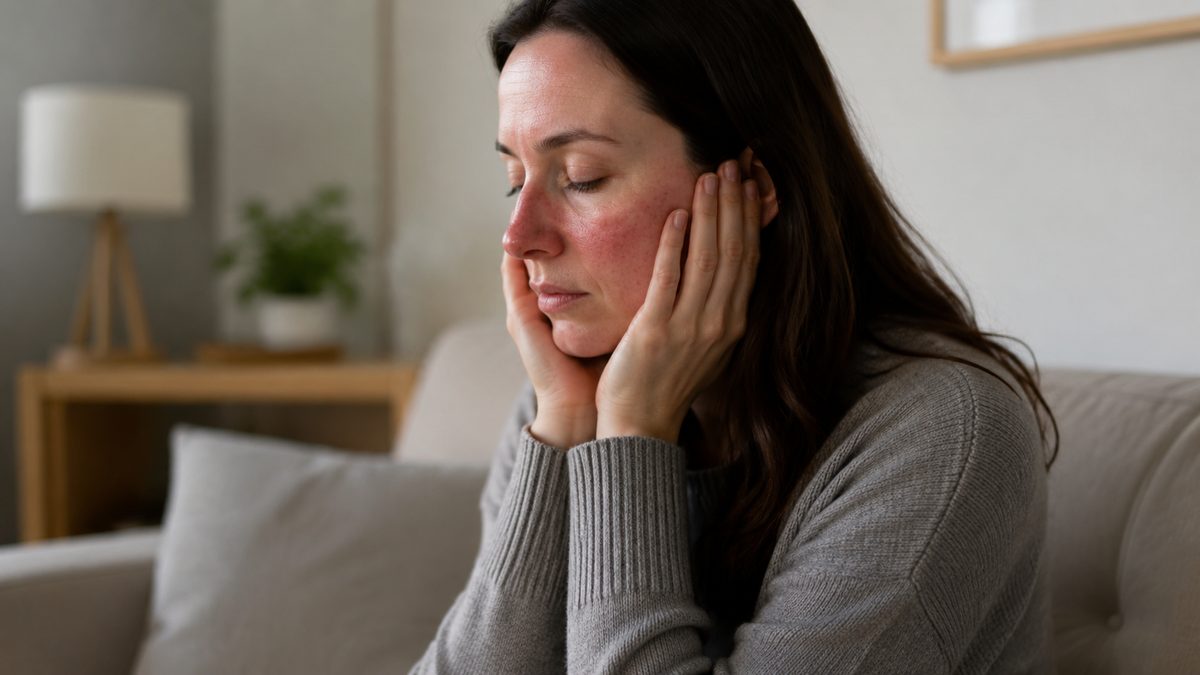
The most recognised lupus rash is the malar rash, a red or pink rash that spreads across both cheeks and the bridge of the nose in a butterfly shape. It can look like a sunburn or rosacea, which is part of why it gets missed.
In my experience reviewing patient presentations, the malar rash is often flat and warm to the touch. It tends to flare after sun exposure and fade during quieter periods of the disease. This is important because lupus rashes are photosensitive, meaning UV light makes them worse [5].
There is also discoid lupus, a more severe skin form that causes raised, scarring lesions. These can appear on the face, scalp, and ears and may cause permanent hair loss if left untreated.
Not everyone with lupus gets the butterfly rash. Some people never develop it. So the absence of a rash does not rule lupus out.
Can Lupus Symptoms Come and Go?
Yes, and this is one of the main reasons lupus takes so long to diagnose.
After diagnosis, most patients follow a relapsing-remitting course. Symptoms flare, then settle, then flare again [1]. During remission, a person can feel completely normal. This pattern makes it easy to dismiss symptoms as stress, a virus, or something minor.
What I found is that the time spent in remission and the total amount of corticosteroid exposure over a lifetime are the two biggest factors that determine organ damage [1]. This means catching lupus early, even during a quiet phase, matters a lot for how the disease progresses.
If you notice symptoms that keep returning in cycles, especially fatigue, joint pain, and rash together, that pattern is worth investigating.
How Does Lupus Affect the Joints and Muscles?
Joint pain is one of the most common reasons people with lupus first see a doctor. It typically affects the small joints of the hands, wrists, and knees. The pain is often symmetric, meaning it hits both sides of the body at the same time.
Unlike rheumatoid arthritis, lupus arthritis usually does not cause the same level of joint destruction. But it is still painful and limiting. Morning stiffness, swelling, and tenderness are typical. Muscle aches and weakness, called myalgia and myositis, also occur and can make everyday tasks feel exhausting [5].
In children and adolescents with lupus, arthritis is one of the most frequently documented early presentations [3]. It is often the symptom that triggers the first rheumatology referral.
What Organs Can Lupus Affect Beyond the Skin and Joints?
This is where lupus becomes serious. The immune system attacks the body's own tissues, and it does not limit itself to skin and joints [5].
Kidneys
Lupus nephritis is the most common target-organ complication of lupus [5]. The kidneys become inflamed, which can lead to protein in the urine, high blood pressure, and over time, kidney failure if not managed. Many people have no obvious symptoms in the early stages, which is why urine testing is a standard part of lupus monitoring.
Heart and Lungs
Lupus can cause inflammation around the heart (pericarditis) and lungs (pleuritis). This shows up as chest pain that worsens when breathing deeply or lying down. Lupus also raises the risk of cardiovascular disease significantly over time [5].
Brain and Nervous System
Neurological involvement in lupus has been documented since the 1950s [4]. Symptoms include headaches, seizures, cognitive difficulties often called lupus fog, mood changes, and in serious cases, stroke. These can appear early in the disease course, sometimes before other signs are obvious [4].
Blood
Lupus commonly affects blood cells. Anaemia, low white blood cell counts, and low platelet counts are all documented. These show up on routine blood tests and are often part of how lupus is first suspected.
Who Gets Lupus?
Lupus is not evenly distributed. It disproportionately affects women, particularly women of African, Asian, Hispanic, and Indigenous backgrounds [3][5]. African American women are diagnosed at higher rates and tend to have more severe disease than Caucasian women.
Around 15% of lupus cases begin in childhood or adolescence [3]. Late-onset lupus, diagnosed after age 50, is less common but tends to be associated with delayed diagnosis and a higher rate of other conditions like Sjögren's syndrome [1].
If you are a woman between 15 and 45, particularly from a non-Caucasian background, and you have unexplained multisystem symptoms, lupus belongs in the differential diagnosis conversation with your doctor [3].
How Is Lupus Diagnosed Based on Its Signs and Symptoms?
There is no single test that confirms lupus. Diagnosis is based on a combination of clinical signs, blood tests, and sometimes tissue biopsy.
The most important blood test is the antinuclear antibody (ANA) test. A positive ANA is present in most people with lupus, but it is not specific to lupus alone. More specific antibodies, like anti-dsDNA and anti-Sm, are used to narrow the diagnosis [5].
Doctors use classification criteria developed by rheumatology organisations to guide diagnosis. These criteria include a range of clinical and laboratory findings across multiple organ systems. A person needs to meet a certain number of criteria to receive a formal diagnosis.
The challenge is that early or incomplete lupus may not meet full criteria yet [1]. In my experience reviewing the literature, this is where patients fall through the cracks. They have real symptoms, real inflammation, and real risk, but the numbers do not add up yet on paper. Treatment decisions in this phase should still be based on symptom severity [1].
Standard diagnostic workup includes:
- Full blood count to check for anaemia and low cell counts
- ANA and specific antibody panel
- Complement levels (C3, C4), which drop during active lupus
- Urine analysis and kidney function tests
- Inflammatory markers like ESR and CRP
- Skin or kidney biopsy if organ involvement is suspected
FAQ
Can you have lupus without a rash?
Yes. The butterfly rash is well known but not universal. Many people with lupus never develop it. Diagnosis is based on a combination of findings, not any single symptom.
Is lupus hereditary?
There is a genetic component. Having a first-degree relative with lupus raises your risk. But genetics alone do not cause it. Environmental triggers, hormones, and immune system factors all play a role [5].
How long does it take to diagnose lupus?
On average, it takes several years from first symptoms to confirmed diagnosis. The relapsing-remitting pattern and overlap with other conditions make early diagnosis difficult [1][2].
Can lupus go into remission?
Yes. Most patients experience periods of remission where symptoms settle significantly. Time in remission is one of the strongest predictors of better long-term outcomes [1].
What triggers a lupus flare?
Common triggers include sun exposure, infections, stress, certain medications, and hormonal changes. Identifying personal triggers is a key part of managing the condition.
Is lupus the same in children as in adults?
The core disease is similar but children tend to have more severe disease at onset, with higher rates of kidney involvement and more aggressive immune activity [3]. Around 15% of all lupus cases begin before adulthood [3].
What is the difference between lupus and rheumatoid arthritis?
Both cause joint inflammation, but lupus affects multiple organ systems and involves specific antibodies not seen in rheumatoid arthritis. Lupus arthritis also tends to cause less joint destruction than rheumatoid arthritis [5].
What to Do If You Recognise These Signs
If you have several of these symptoms, especially fatigue, joint pain, rash, and unexplained fever that come and go, ask your doctor for a lupus workup. Start with an ANA test and a full blood count.
Do not wait for every symptom to be present at once. Lupus builds gradually, and early intervention changes outcomes [1]. The goal is to reduce flares, protect organs, and minimise long-term damage before it accumulates. Explore lupus management resources to support your treatment plan.
A rheumatologist is the right specialist for this. If your GP is not familiar with lupus presentations, ask for a referral. The research is clear that what are the 7 signs of lupus is not a simple question with a fixed answer, but the pattern of multisystem symptoms in a young woman, particularly from a higher-risk ethnic background, should always prompt investigation [3][5].
Sources
- Piga M, Tselios K, Viveiros L, Chessa E, Neves A, Urowitz MB, et al. "Clinical patterns of disease: From early systemic lupus erythematosus to late-onset disease." Best Pract Res Clin Rheumatol. PMID: 38388232
- (2015) "298. Early Symptoms in Systemic Lupus Erythematosus: Can they be used to Predict Diagnosis?" Rheumatology. DOI: 10.1093/rheumatology/kev090.063
- Tucker L (2007) "Review: Making the diagnosis of systemic lupus erythematosus in children and adolescents" Lupus. DOI: 10.1177/0961203307078068
- Siekert R, Clark E (1955) "Neurologic Signs and Symptoms as Early Manifestations of Systemic Lupus Erythematosus" Neurology. DOI: 10.1212/wnl.5.2.84
- Kiriakidou M, Ching CL "Systemic Lupus Erythematosus." Ann Intern Med. PMID: 32479157
Explore this topic: lupus guides. For tailored support, see NDIS personal training in Melbourne.

Does Rheumatoid Arthritis Qualify for Disability in Australia?
Read article →
What Benefits Am I Entitled to If I Have Rheumatoid Arthritis?
Read article →
Do You Qualify for NDIS If You Have Rheumatoid Arthritis?
Read article →
Is Renal Failure Covered by NDIS? What You Need to Know
Read article →
Is Stuttering Covered by NDIS? What You Need to Know
Read article →
Is Lupus Covered Under NDIS? What You Need to Know
Read article →Explore more Better Start guides
Use these topic hubs to keep reading related articles by condition, support need, or funding question.
NDIS & disability
Access, funding, planning, disability support, and eligibility guides.
Open hub →Lupus
Symptoms, diagnosis, flares, disability support, and daily life.
Open hub →Autoimmune disease
Symptoms, coping strategies, long-term health, and support options.
Open hub →Rheumatoid arthritis
Flares, treatments, daily living, disability support, and NDIS questions.
Open hub →Kidney disease
Kidney symptoms, kidney failure, dialysis, and support questions.
Open hub →Speech therapy
Therapy funding, stuttering, cleft palate, dyslexia, and communication support.
Open hub →