What are the signs of autistic behaviour?
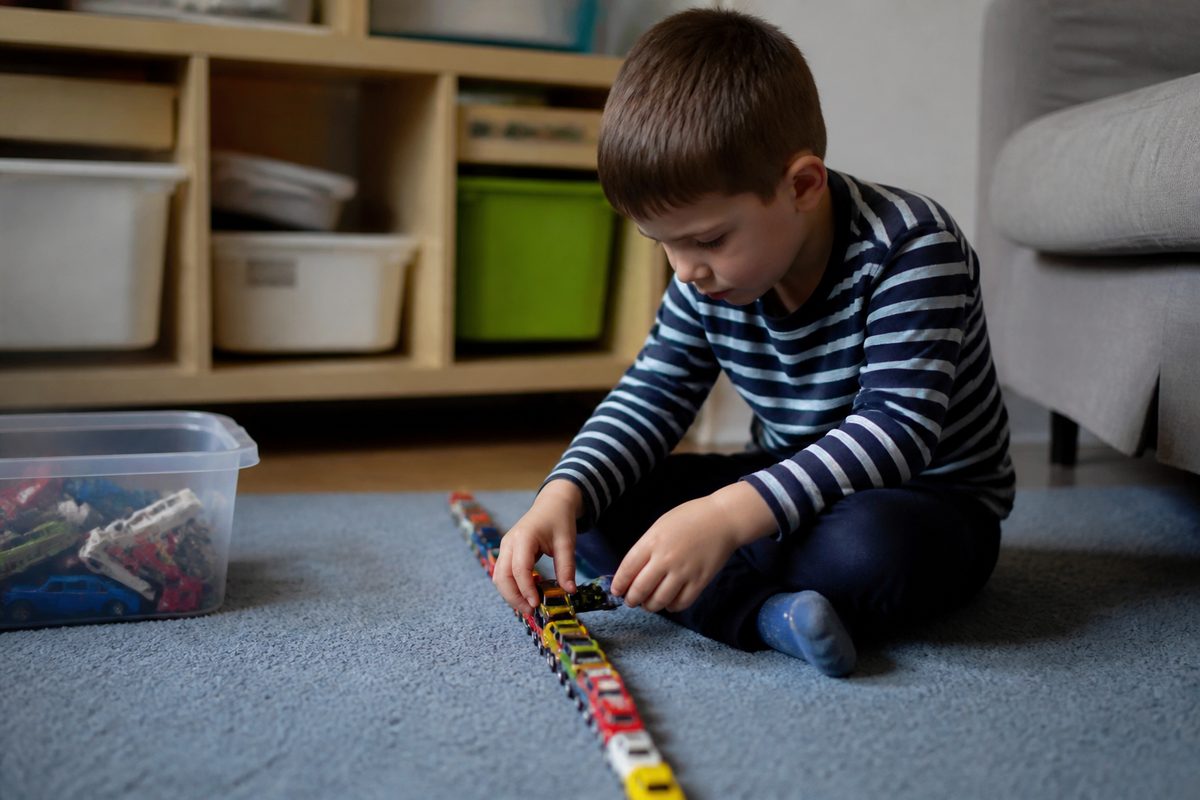
Signs of autism usually appear as a lasting pattern across two broad areas. One area involves differences in social communication and interaction. The other involves repetitive behaviour, focused interests, routines or sensory responses. These traits vary between people and may change with age, setting and stress. No single behaviour confirms autism. Only an appropriately qualified professional can make a diagnosis after a full assessment.
Autism is a neurodevelopmental condition. This means autistic traits begin during development, even when nobody recognises them until school, work or adult life. Some signs are clear early. Others become visible when daily demands grow. The useful question is not whether someone has one common sign. It is whether a group of traits has appeared over time and affects communication, relationships, learning, work, wellbeing or daily activities.
Why does the wider pattern matter more than one behaviour?
Many behaviours linked with autism also occur in non-autistic people. A child may avoid eye contact because they feel shy. An adult may need routines because they feel anxious. Someone may miss part of a conversation because the room is noisy, their attention has shifted or they need more time to process speech.
One action cannot explain the whole person. Clinicians look at which traits appear together, when they began, where they happen and how they affect daily life. They also consider strengths, learned coping methods and the amount of effort required to manage different settings.
A meaningful pattern may include social communication differences alongside a strong need for predictability, repeated movements or distinct sensory needs. The exact mix differs. One autistic person may speak very little and seek frequent movement. Another may speak fluently, follow strict private routines and find group talk exhausting. Both may be autistic, but their behaviour and support needs can look very different.
Frequency and context add useful detail. A repeated movement that appears during excitement may serve a different purpose from distress during an unexpected change. A communication difficulty that occurs only in one tense setting tells a different story from a pattern seen at home, school and in the community.
Keep notes about what happens before, during and after a behaviour. Record the setting, the demand, the person’s response and what helped. This gives a clearer picture than counting signs on an online checklist.
How can social communication differences appear?
Autistic communication ranges widely. Some autistic people use little or no spoken language. Some communicate through gestures, signs, pictures or a device. Others have a large vocabulary and speak with confidence but find the unspoken parts of conversation hard to read.
Possible signs include difficulty taking turns in conversation, knowing when to speak or working out how much detail another person needs. Someone may talk at length about a strong interest, give brief answers or need a clear topic before joining in. Group conversations can be hard because voices overlap and the topic changes fast.
Implied meaning may also cause confusion. An autistic person might take a vague request literally or miss sarcasm, hints and figures of speech. A request such as “Can you get ready soon?” may be harder to act on than “Put on your shoes now.” This does not mean the person is being difficult. The first request leaves the task and timing unclear.
Facial expression, tone and gestures may differ from what other people expect. A person may use fewer gestures, speak with an even tone or show emotion in a way that others do not recognise. They may also find it hard to read another person’s face or work out whether a comment is serious. These differences do not mean autistic people lack emotion, affection or empathy.
Eye contact is another poor standalone test. Some autistic people find it distracting or uncomfortable. Others make eye contact naturally or have learned to do it because people expect it. Eye contact also varies with culture, personality and situation.
Shared attention can look different in young children. A child may be less likely to point something out simply to share interest, follow another person’s point or bring an object over to show it. They may prefer playing alone at times or use toys in a repeated way. Yet one example cannot establish autism, and children show social interest in many different forms.
Relationships may be wanted but hard to manage. A child might struggle to enter a game whose rules were never stated. An adult may miss signs that a colleague wants to end a conversation. Some people prefer one close friendship or connect through shared activities instead of frequent social talk.
Apparent “not listening” needs context. A delayed response can happen when someone is deeply focused, processing speech, coping with background sound or unsure what the speaker expects. It can have many causes and is not proof of autism or deliberate disregard. Clear words, less background noise and extra response time can help reveal what is happening.
What might repetition, routine and focused interests tell you?
Restricted or repetitive behaviour can involve movement, speech, objects, routines or interests. Repetition often has a purpose. It may help a person regulate their body, express excitement, manage stress or enjoy a pleasant feeling.
Repeated movements may include rocking, pacing, finger movements, hand movements or moving an object in the same way. A person might repeat a sound, question or phrase. Some repeat words they have heard from another person, a video or a favourite story. Repeated language may help them communicate, rehearse meaning or stay calm.
Objects may be arranged by colour, shape or a set order. A child may focus on part of a toy, repeat the same play sequence or become upset if someone changes it. An adult might complete everyday tasks in a fixed order or check that items remain in an expected place.
Routines can make the day predictable. Signs may include strong distress when plans change, trouble moving from one activity to another or a need to know exactly what will happen. The response may become stronger when the person is tired, overloaded or faced with several changes at once.
Focused interests can be deep and rewarding. A person may collect detailed facts, practise one activity often or return to the same subject in conversation. The topic itself does not reveal autism. What matters is its place in the wider developmental pattern, its intensity and whether it supports or restricts daily life.
Trying to stop a harmless movement or interest can remove a useful way to cope. First ask what the behaviour does for the person. If pacing helps during a difficult transition, a safe place to pace may work better than demanding stillness. If a routine prevents someone from completing essential tasks, support can focus on making changes clearer and more manageable.
How can sensory differences affect behaviour?
An autistic person may be highly sensitive to sound, light, touch, texture, smell, taste or temperature. Another person may notice these sensations less or actively seek them. One person can also be sensitive in one area and seek input in another.
Sound sensitivity may look like covering the ears, leaving busy places or becoming distressed by appliances, hand dryers or several voices at once. Visual sensitivity may make bright lights or crowded spaces tiring. Clothing seams, food textures, smells or unexpected touch can also trigger a strong response.
Reduced sensitivity may be harder to notice. A person might respond less to temperature, pain or mess on their face. Sensory seeking may involve jumping, spinning, touching surfaces, chewing safe items or watching repeated movement. These actions can provide input the nervous system is seeking.
Behaviour that appears sudden may follow a build-up of sensory demand. Consider a hypothetical example: a child manages classroom chatter, a bright room and an itchy uniform for hours, then cries when asked to change activities. The final request may be the visible trigger, while the full sensory load explains why the response is so strong.
Observe the environment before treating the response as disobedience. Reducing noise, changing lighting, allowing comfortable clothing or giving advance notice may make a task easier. Seek professional advice about sudden changes, possible pain, unsafe actions or any medically concerning response.
How may the signs look different as someone grows?
Age changes how autistic traits appear, but it does not create autism later in life. Early traits can be missed when they are subtle, when the environment suits the person or when adults explain each behaviour on its own.
What might families notice in early childhood?
A young child may use gestures, shared attention or spoken language differently. They may respond to social bids in an unexpected way, prefer repeated play, react strongly to sensory input or find changes difficult. Language development can vary. A delay may prompt assessment, but fluent or early speech does not rule out autism because social use of language may still differ.
Parents should focus on development over time rather than compare one action with a rigid list. A loss of skills the child previously used, including language, social or movement skills, needs prompt professional evaluation. Skill loss can have different causes and should not be assigned to autism without assessment.
What may become clearer during school years?
School adds group rules, busy rooms, transitions and complex friendships. A child who coped well in a quiet setting may struggle when instructions become less direct or social rules become harder to work out. They may follow classroom rules closely, become distressed by changes or need long recovery after the school day.
Some children copy peers, rehearse conversations or hide movements to avoid standing out. This is often called masking. The child may appear settled while using a great deal of effort. Signs may show later as exhaustion, withdrawal or distress in a safer setting. Adults should compare reports across settings without assuming that one observer has the full picture.
What can autistic traits look like in adults?
Adults may find hidden social rules, workplace politics, networking or rapid group talk difficult. They might plan conversations, copy expected expressions or review social exchanges afterwards. A strong routine may help them manage work, meals, travel or household tasks. Open offices, changing shifts and unclear requests may create heavy sensory and processing demands.
Some adults have been described informally as having “mild autism” because their traits are less visible. That phrase can hide real support needs. A person may perform well at work yet need strict routines, quiet recovery time and careful planning to maintain that performance.
An adult considering assessment can record early memories, school reports if available, current difficulties, strengths and coping methods. It also helps to note what happens when familiar supports are removed. Recognition in adulthood does not mean the traits began in adulthood.
When should you seek a professional autism assessment?
Seek advice when a lasting pattern affects communication, relationships, learning, work, wellbeing or daily activities. Parents should also seek prompt advice about developmental concerns or loss of skills. You do not need to wait until problems become severe before asking for help.
A screening questionnaire may show that a fuller evaluation could be useful. It cannot diagnose autism. Online checklists also miss context, development and other possible explanations.
A comprehensive assessment looks beyond visible behaviour. It may consider developmental history, present strengths, communication, sensory experiences, routines and reports from relevant settings. The process can also explore other reasons for similar behaviour, such as hearing differences, language differences, attention, anxiety, trauma, learning needs or another developmental condition. These can occur instead of autism or alongside it.
The exact assessment pathway varies by age and location. A GP, paediatrician, psychologist or another locally appropriate qualified professional can help identify the next step. Bring concrete examples rather than broad labels. Note how often the behaviour occurs, where it happens, what seems to trigger it, how long it affects the person and what support helps.
Support does not need to wait for a diagnosis. Clear language, predictable plans, extra processing time and reasonable sensory changes can address present needs without assuming a cause. Support should protect safety and daily participation, not aim to erase harmless autistic behaviour.
Your next step: Record the pattern across settings and over time, then take those notes to an appropriately qualified professional while supporting the person’s communication, predictability and sensory comfort now.
Explore this topic: NDIS and disability guides. For tailored support, see NDIS personal training in Melbourne.

What not to do with an autistic child?
Read article →
Can an autistic child live normal life?
Read article →
Can level 1 autism live normal lives?
Read article →
How serious is level 1 autism?
Read article →
What Characteristics Does an Autistic Child Have? A Parent's Plain-English Guide in Melbourne
Read article →
What are stereotypical behaviors in autism?
Read article →Explore more Better Start guides
Use these topic hubs to keep reading related articles by condition, support need, or funding question.
NDIS & disability
Access, funding, planning, disability support, and eligibility guides.
Open hub →Lupus
Symptoms, diagnosis, flares, disability support, and daily life.
Open hub →Autoimmune disease
Symptoms, coping strategies, long-term health, and support options.
Open hub →Rheumatoid arthritis
Flares, treatments, daily living, disability support, and NDIS questions.
Open hub →Kidney disease
Kidney symptoms, kidney failure, dialysis, and support questions.
Open hub →Speech therapy
Therapy funding, stuttering, cleft palate, dyslexia, and communication support.
Open hub →