What can a person with very limited mobility do to keep active?
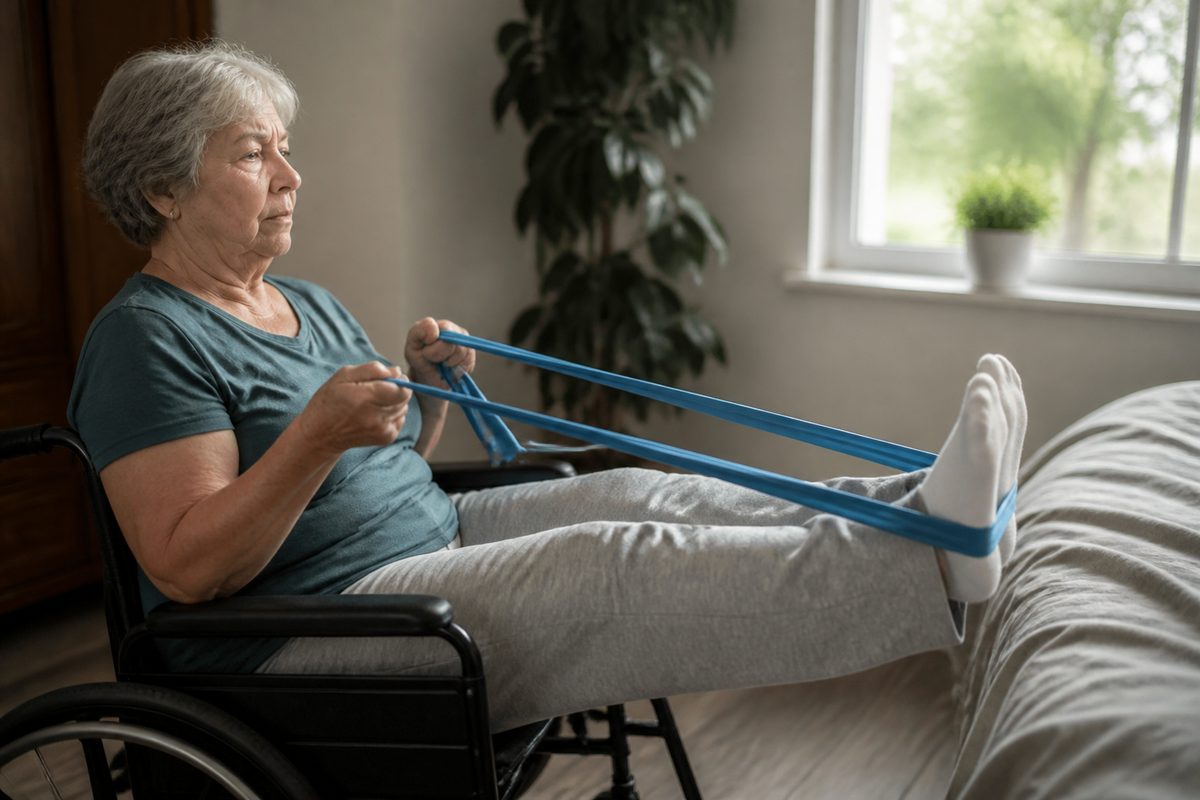
A person with very limited mobility can keep active through short, supported movements performed in a chair, in bed, or during daily care. It doesn't need to look like a workout. Reaching for a cup, pressing a foot into the floor, rolling in bed, or helping with a transfer all count.
The main aim is to break up long periods without movement. Small actions spread across the day often work better than one long session. They use less energy, leave more time to recover, and can fit around pain or personal care.
They also give the person more chances to join in with daily life.
Very limited mobility can come from a health condition, injury, pain, weakness, fatigue, poor balance, or several of these at once. One person may move an arm with ease but be unable to stand. Another may stand with help but tire within seconds.
A useful plan begins with movement the person can control right now.
What counts as being active when movement is very limited?
Activity means asking the body to do more work than it does at complete rest. That might mean moving a joint, tightening a muscle, changing position, controlling a breath, or taking part in a transfer.
This wider view matters. Many people think exercise with poor mobility. That idea can make someone's real effort seem worthless.
Yet a tiny movement may put a serious demand on weak skeletal muscle. Lifting an arm five times can be hard work for someone recovering from illness.
Useful activity may include:
- Turning the head to look toward a sound.
- Opening and closing the hands.
- Sliding one heel along the bed.
- Reaching toward objects used during grooming.
- Pressing the back or legs into a chair for a few seconds.
- Helping to push through an armrest during a transfer.
- Changing position with the level of support prescribed by a health professional.
Participation is a better measure than distance. Ask which part of a task the person can do. They might hold a sleeve while someone helps them dress.
Or they may wash their face after another person prepares the cloth. These actions give the muscles and brain a reason to work together.
How can movement fit into an ordinary day?
Link movement to things that already happen. There's no need to find a separate workout time, and the activity becomes easier to remember.
While dressing, the person might reach an arm into a sleeve or lift a foot for a sock. At a meal, they could sit upright with support and bring light items toward their body. During television breaks, they might try ankle movements or soft arm reaches.
In bed, they could help with rolling by reaching across the body.
Use regular movement prompts instead of waiting for motivation to appear. A meal, favourite television programme, care visit, or phone alarm could act as the cue. One or two minutes may be plenty at first.
Another chance will come later.
Picture someone who can sit upright for six minutes before fatigue harms their posture. A planned 20-minute session may fail each day. But four separate two-minute activity periods could work.
That person gets more useful movement without reaching exhaustion.
Many activity plans miss this: the rest of the day matters more than the formal session. Ten minutes of movement can't fully make up for hours in one position. Soft position changes and brief muscle work help break up that still time.
Which movements can be done from a chair?
Chair-based movement can use the upper body, trunk, or legs. The chair should feel steady. Wheelchair brakes should be applied when this fits the chair's instructions and the planned activity.
Options may include:
- Opening the arms, then bringing the hands back toward the chest.
- Reaching toward safe objects placed at different heights.
- Bending and straightening one elbow at a time.
- Gently turning the upper body while the hips remain supported.
- Lifting one knee a small distance or sliding a foot forward.
- Pressing both feet into the floor without trying to stand.
- Pushing the hands into the armrests for several seconds.
The movement doesn't need to be large. A controlled motion through just a few centimetres still makes the muscles work. Support the weaker limb when needed, but don't pull it by the hand or wrist.
Strength training can happen in a chair too. It means working against resistance from gravity, a resistance band, a light object, or the person's other hand. Begin with resistance they can control without holding their breath or losing posture.
How can someone move while staying in bed?
Bed-based activity can help someone who can't transfer safely to a chair. It's also a lower-effort choice on a tough day.
Possible movements include bending and straightening the fingers, sliding an arm across the sheet, pointing the toes, drawing one heel toward the body, or tightening and releasing the thigh. The person may practise reaching toward the bed rail if that rail has been approved for their use.
Movement can be paired with breathing. The person might breathe in while opening the hands, then breathe out while closing them. This sets a steady pace and may stop them from holding their breath.
Moving around in bed is an activity in itself. Helping to roll, lift the hips a little, move a leg toward the edge, or adjust the upper body can take real effort. A physiotherapist or occupational therapist can show carers where to give support.
That way, the person stays involved instead of being moved like a passive load.
Being in bed isn't a reason to stop all movement. But don't try unplanned sitting or transfers from the bed. These tasks may carry a fall risk and need trained help.
How can activity improve daily independence?
Pick movements tied to something the person wants to do. This gives each action a clear point and makes it easier to understand.
If the goal is drinking with less help, practise reaching for a light cup, closing the hand around it, and guiding it toward the mouth. If the goal is using a call button, put it where the person can practise a safe reach. If they want to help with a transfer, work only on the parts approved by their therapist, such as placing the feet or pushing through an armrest.
Exercise equipment can help, but it should suit the task. Useful items might include a soft ball for hand work, a light resistance band, a pedal device, or an arm cycle. Gear that's awkward to set up often sits unused.
A rolled towel, plastic cup, or cushion may support the same movement with less fuss.
Physical fitness is about more than walking. It includes strength, stamina, joint movement, and the ability to recover after effort. Someone may improve one part even when a health condition limits another.
For example, better arm endurance may make grooming easier even if their walking doesn't change.
How hard should each activity feel?
Exercise intensity should fit the person's health, energy, and control of movement. For many people with severe limits, the first effort should feel light to moderate. They should still be able to talk, breathe steadily, and keep the same quality of movement.
Watch how they respond during the activity and for several hours afterwards. Stop and seek urgent medical help for chest pain, fainting, severe shortness of breath, or sudden new weakness. End the activity if the person becomes pale, confused, very upset, or unable to hold a safe position.
Pain gives useful clues too. Mild muscle effort may feel strange, but sharp pain or rising joint pain means stop. If a movement causes symptoms every time, change the range, support, position, or task.
Don't force it.
Fatigue may show up later. If morning activity leaves the person unable to eat lunch or join in with personal care, the dose was too high. Cut the repetitions or divide the activity into shorter parts.
Can very small movements support heart and lung health?
Repeated movements that use larger muscle groups can support cardiovascular fitness, even while the person stays seated. Examples include steady arm movements, supported marching, heel slides, or using an arm cycle. The pace should raise their breathing a little without making speech hard.
One long effort isn't needed. A person could move for 30 seconds, rest, then repeat when ready. With time, they might add a few seconds of activity or shorten the rest.
That's still progress.
Here's another often-missed point: progress doesn't always mean making a movement harder. It could mean smoother motion, less help, better control, or quicker recovery. Those gains may matter more than the number of repetitions.
What can another person do to make activity easier?
A carer, family member, or support worker should invite effort without taking control. Give the person time to begin. Use a clear cue such as, “Press your foot down,” rather than moving the limb before they respond.
Offer simple choices. Ask whether they want hand movements or arm reaches. Arrange the space so useful objects are within a safe working range.
Cut down noise if they find it hard to focus.
Write down what the person did and how they felt later. A simple note might say, “Two minutes of seated reaching before lunch, no extra fatigue.” This helps the care team spot patterns and adjust the plan.
Never pull a weak arm, force a stiff joint, or make up a transfer method. Some conditions also need limits on weight bearing, movement range, or effort. Follow the person's care plan and ask for advice if the safe level isn't clear.
How can a simple routine keep working?
Shape the routine around one meaningful task and several short chances to move. Keep it easy enough to repeat on most days.
- Choose one safe position, such as supported sitting or lying in bed.
- Select one movement the person can control.
- Set a small dose, such as several repetitions or up to two minutes.
- Check breathing, pain, posture, and later fatigue.
- Repeat at a regular daily cue and record the response.
Ask a physiotherapist, occupational therapist, exercise physiologist, nurse, or doctor to check the routine after a recent fall, hospital stay, new pain, marked swelling, changing weakness, or a major change in breathing. Expert help is also useful when the person needs hands-on support or special seating.
Start today by linking one safe, controlled movement to one task that already happens every day.
Common questions
What is the best exercise for people with limited mobility?
The best exercise is one that feels safe, such as chair exercises, gentle stretching, or moving the arms and legs. A doctor or physical therapist can help choose movements that match the person’s ability.
Is limited mobility a disability?
Limited mobility can be a disability if it makes daily tasks or getting around much harder. It may be temporary or long-term, depending on the cause.
What can lack of mobility cause?
Lack of movement can cause weak muscles, stiff joints, poor balance, and slower blood flow. It may also affect sleep, mood, and independence.
How to cope with limited mobility?
Use helpful equipment, make the home safer, and stay active with small movements that feel comfortable. Ask family, carers, or health workers for support with daily tasks and a safe activity plan.
Explore this topic: NDIS and disability guides. For tailored support, see NDIS personal training in Melbourne.

What not to do with an autistic child?
Read article →
Can an autistic child live normal life?
Read article →
Can level 1 autism live normal lives?
Read article →
How serious is level 1 autism?
Read article →
What are the signs of autistic behaviour?
Read article →
What Characteristics Does an Autistic Child Have? A Parent's Plain-English Guide in Melbourne
Read article →Explore more Better Start guides
Use these topic hubs to keep reading related articles by condition, support need, or funding question.
NDIS & disability
Access, funding, planning, disability support, and eligibility guides.
Open hub →Lupus
Symptoms, diagnosis, flares, disability support, and daily life.
Open hub →Autoimmune disease
Symptoms, coping strategies, long-term health, and support options.
Open hub →Rheumatoid arthritis
Flares, treatments, daily living, disability support, and NDIS questions.
Open hub →Kidney disease
Kidney symptoms, kidney failure, dialysis, and support questions.
Open hub →Speech therapy
Therapy funding, stuttering, cleft palate, dyslexia, and communication support.
Open hub →