What percentage of paralyzed people walk again?
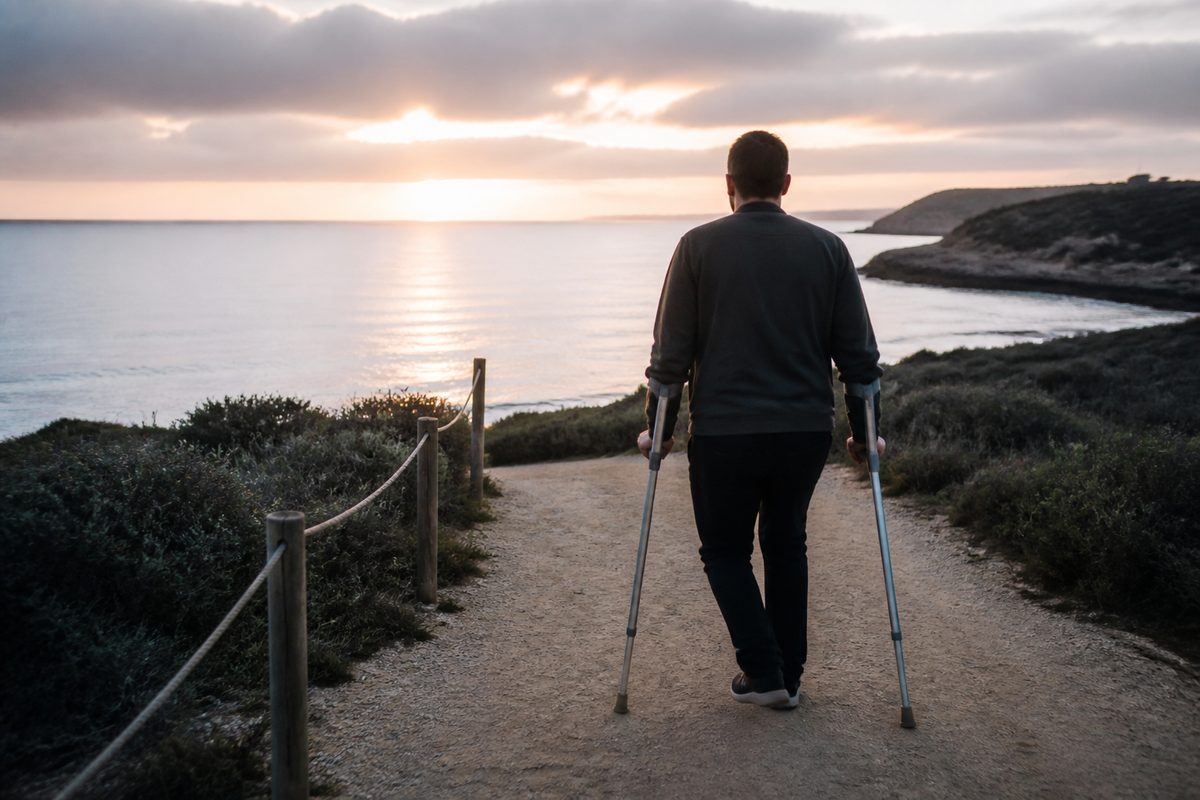
There is no single reliable percentage. Walking recovery is very unlikely after a complete Spinal cord injury, but common after a less severe, incomplete injury. Studies often report rates from below 10% to above 80%. The result depends on who was studied and what researchers counted as Walking.
That wide range is the key fact. A headline number means little unless it explains the cause of Paralysis, the level and severity of the Injury, how long ago it happened, and whether the person needed help to walk.
The best estimate comes from the person's neurological exam. For traumatic damage to the Spinal cord, the American Spinal Injury Association grading system groups injuries by the movement and feeling left below the damaged area. Those findings tell you far more than an average covering every type of paralysis.
Why do published walking percentages vary so much?
Researchers don't always study the same kinds of people. One study may cover severe traumatic injuries, while another looks at incomplete injuries where some nerve signals still get through. A third may include stroke, multiple sclerosis, cerebral palsy, or another Neurological disorder.
These groups aren't one population. They shouldn't be treated like one.
The word “paralyzed” can also describe very different states. It may mean no movement in both legs, weakness on one side, less control in all four limbs, or a short-term loss of movement early after an injury. Each one has a different recovery pattern.
Definitions of walking also change the result. Researchers may count any of the following:
- Taking steps between parallel bars with two therapists helping.
- Walking indoors with braces or a frame.
- Walking without another person's physical help.
- Walking far enough and fast enough for daily life.
Taking ten supported steps is a real treatment milestone. But it doesn't mean the person can safely cross a road, walk through a shop, or depend on walking at home. Studies with a low bar will report higher recovery rates than those that require independent community mobility.
Follow-up time shifts the answer too. A result recorded when someone leaves hospital may miss gains made over the next year. Long-term records may capture more recovery, but researchers can lose touch with some participants.
Before trusting a percentage, check the people studied, the walking test, and when the result was measured.
Which numbers are most useful after a spinal cord injury?
Walking estimates after traumatic Spinal cord injury are usually grouped by the first neurological grade. Clinicians often use the American Spinal Injury Association Impairment Scale, known as the AIS scale. It runs from AIS A, where no feeling or movement remains in the lowest sacral segments, to AIS E, which means tested function is normal after an earlier problem.
Broad research patterns look like this:
- AIS A: Useful independent walking is uncommon, especially when the injury affects the upper or middle chest region. Published rates often stay below 10%, though results vary by injury level and study design.
- AIS B: Some feeling remains below the injury, but useful movement is missing at the first exam. Walking results vary a lot. Preserved pinprick feeling and a lower injury level may improve the estimate.
- AIS C: Movement remains below the injury, but many key muscles are weak. A large share regain some walking. Age, muscle strength, and how much help the study allows can sharply change the reported percentage.
- AIS D: More key muscles can work against gravity. Most people in this group recover some form of walking, with many studies reporting rates above 80%.
These ranges describe groups. They can't promise one person's result. Someone at the stronger end of AIS C may have more walking potential than the group average suggests.
Someone graded AIS D may take steps in a clinic but still use a wheelchair for safe daily travel. Fatigue, pain, poor balance, or slow speed can make walking impractical.
The timing of the grade matters. Swelling, surgery, medicine, spinal shock, and an unstable medical state can affect the first exam. Clinicians repeat it because the early grade may change as the body settles.
A percentage based on a later, reliable exam is more useful than one based on the first hours after trauma.
What details change an individual estimate?
The neurological level of injury has a big effect. Lower injuries leave more muscles under the person's control. Someone with strong hip and knee muscles starts in a different place from someone whose injury also limits the trunk, arms, or breathing.
Completeness matters even more. An incomplete injury leaves some working pathways through the damaged area. The signals may be weak or unclear, but rehabilitation can train the person to use them better.
A complete clinical injury means the exam finds no function left in the sacral segments. It doesn't mean every nerve cell at the injury site is destroyed. But it does mean useful walking recovery is much less common.
Early leg strength adds detail that the category alone can't show. Small changes in hip flexion, knee extension, ankle control, or toe movement help the team see which pathways are active. Feeling matters too, since the feet and joints give the body feedback for each step.
Age may affect how fast and how much someone recovers, but it shouldn't be used as a stand-alone verdict. Other health problems may limit training more directly. Pressure injuries can stop someone using a brace, while severe pain may cut practice short.
Joint stiffness can also block a useful standing position, even when the muscles start to work.
One detail often missed in percentage-based articles is arm function. A person using crutches or a frame needs enough grip, shoulder control, and stamina to handle the device. The legs may recover enough to step while weak arms still make independent walking unsafe.
When does most neurological recovery occur?
The fastest change often happens in the first few months after a spinal cord injury. Recovery may continue beyond the first year, though gains usually slow over time. This pattern can guide review dates, but it isn't a hard deadline.
Early change has several causes. Swelling may drop, and bruised nerve tissue may begin working again. The nervous system may also get better at sending signals through pathways that survived.
Practice then helps turn that available movement into a skill the person can repeat.
Walking skill and neurological recovery are linked, but they're not the same. Neurological recovery means nerve or muscle function has returned. Skill training teaches someone to use it for standing, shifting weight, lifting a foot, and controlling each landing.
Physical therapy can't replace a destroyed pathway. It can, however, make better use of the pathways still working.
Later progress may show up in smaller ways. Someone may need less help to stand, walk farther before resting, or switch from a frame to sticks. In daily life, these gains may matter more than a new label in a medical record.
How should a family read a recovery statistic?
First, ask whether the number describes someone with the same diagnosis. A stroke study can't predict recovery after spinal trauma. Data from incomplete injuries shouldn't be applied to a complete injury.
Results from young adults also need care when an older person has several health problems.
Next, check the study's walking standard. “Able to walk” may still allow braces, a frame, supervision, or hands-on help. Look at the distance tested and whether the result came from a treatment room or everyday life.
Then check when the first neurological grade was recorded. An AIS grade taken after the acute stage may give a steadier base for a forecast. Ask whether the study followed people for six months, one year, or longer.
Last, treat the figure as a group range. If 60% of a matched group reached a walking target, one person isn't 60% recovered. It means 60 out of every 100 people with the study's features reached the target named in that study.
Families often hear two percentages from two sources and assume one must be wrong. Usually, the studies measured different outcomes. One may count supported indoor steps, while the other counts independent outdoor walking.
Reading the method often clears up the clash.
What does rehabilitation change?
Physical medicine and rehabilitation puts medical care, therapy, equipment, nursing, and goal setting into one plan. Its job is to improve function while protecting the body from harm that can be avoided. It also helps the person build a useful life while recovery is still uncertain.
Physical therapy may include step practice, standing, strength work, balance training, joint care, and fitness. When it fits the person's needs, a therapist may use body-weight support, braces, electrical stimulation, or robotic equipment. These tools can allow more practice or make it safer.
They don't prove that independent walking will return.
A common mistake is judging treatment only by whether the person walks without equipment. A brace may steady the knee enough for practice. A frame may help someone train weight transfer with less risk of falling.
A wheelchair can save energy for work, parenting, study, and social life while walking stays a therapy goal.
More walking practice isn't always better. Poor steps repeated through pain or unsafe joint positions may cause harm. The right dose should challenge the nervous system while protecting the shoulders, skin, bones, and joints.
A skilled team also trains the tasks that support walking. Transfers, moving in bed, wheelchair use, pressure relief, and general fitness can improve independence right now. They remain useful if walking gets better later.
How is meaningful walking progress measured?
A yes-or-no walking label hides useful changes. A good review records how much help is needed, which device is used, and the person's distance, speed, balance, and effort. It also checks whether the skill works where the person needs to go.
Useful measures can include:
- How much physical help is needed to stand and step.
- How far the person travels before stopping.
- Walking speed and the time needed for turns.
- Falls, near falls, pain, and fatigue after practice.
- Whether the person can manage slopes, doors, and uneven ground.
Independence may improve even if the legs gain little strength. A better brace, a safer way to transfer, or a well-fitted wheelchair can cut the amount of daily help needed. That's why a walking percentage should never be the only measure of recovery.
Personal goals also change what counts as meaningful. Ten metres may let one person reach the bathroom at home. Someone else may need several hundred metres to use public transport.
The same test result can mean something very different in each life.
What should you ask the rehabilitation team?
Ask for the current neurological level and AIS grade in plain language. Find out when the exam was done and whether the result has changed. Ask which leg muscles work and which areas can feel touch or pinprick.
The team should also explain which limits come from pain, stiffness, balance, or low stamina.
Useful questions include:
- Which research group most closely matches this injury?
- What did those studies count as walking?
- Which signs in the current examination support or reduce walking potential?
- What will the team measure over the next treatment block?
- Which goals will improve independence while recovery remains uncertain?
Be wary of a precise personal percentage given without a full exam. Be wary, too, of clinics using videos of hand-picked successes as proof. A sound forecast links the person's findings to useful group data, explains the limits, and sets clear review points.
The clearest next step is to ask a spinal rehabilitation team to record the neurological level, AIS grade, current walking standard, and next review date in writing before using any percentage to guide decisions.
Common questions
What are the chances of a paralyzed person walking again?
There is no single percentage because the chance depends on where and how badly the nerves were damaged. People with an incomplete spinal cord injury are more likely to walk again than those with a complete injury.
Is paralysis 100% curable?
No, paralysis is not always curable. Treatment and therapy may restore some movement or help a person live more independently.
What is the life expectancy of a paralyzed person?
Many paralyzed people live for decades, and some have a life span close to average. Life expectancy depends on the injury, age, health, and access to good medical care.
Can paraplegics feel when they need to pee?
Some paraplegic people can feel when their bladder is full, while others cannot. They may use a schedule, a tube called a catheter, or other methods to empty the bladder safely.
Explore this topic: NDIS and disability guides. For tailored support, see NDIS personal training in Melbourne.

What not to do with an autistic child?
Read article →
Can an autistic child live normal life?
Read article →
Can level 1 autism live normal lives?
Read article →
How serious is level 1 autism?
Read article →
What are the signs of autistic behaviour?
Read article →
What Characteristics Does an Autistic Child Have? A Parent's Plain-English Guide in Melbourne
Read article →Explore more Better Start guides
Use these topic hubs to keep reading related articles by condition, support need, or funding question.
NDIS & disability
Access, funding, planning, disability support, and eligibility guides.
Open hub →Lupus
Symptoms, diagnosis, flares, disability support, and daily life.
Open hub →Autoimmune disease
Symptoms, coping strategies, long-term health, and support options.
Open hub →Rheumatoid arthritis
Flares, treatments, daily living, disability support, and NDIS questions.
Open hub →Kidney disease
Kidney symptoms, kidney failure, dialysis, and support questions.
Open hub →Speech therapy
Therapy funding, stuttering, cleft palate, dyslexia, and communication support.
Open hub →